Moselia zonata
Stark & Harrison, 2016
Banded-wing Needlefly
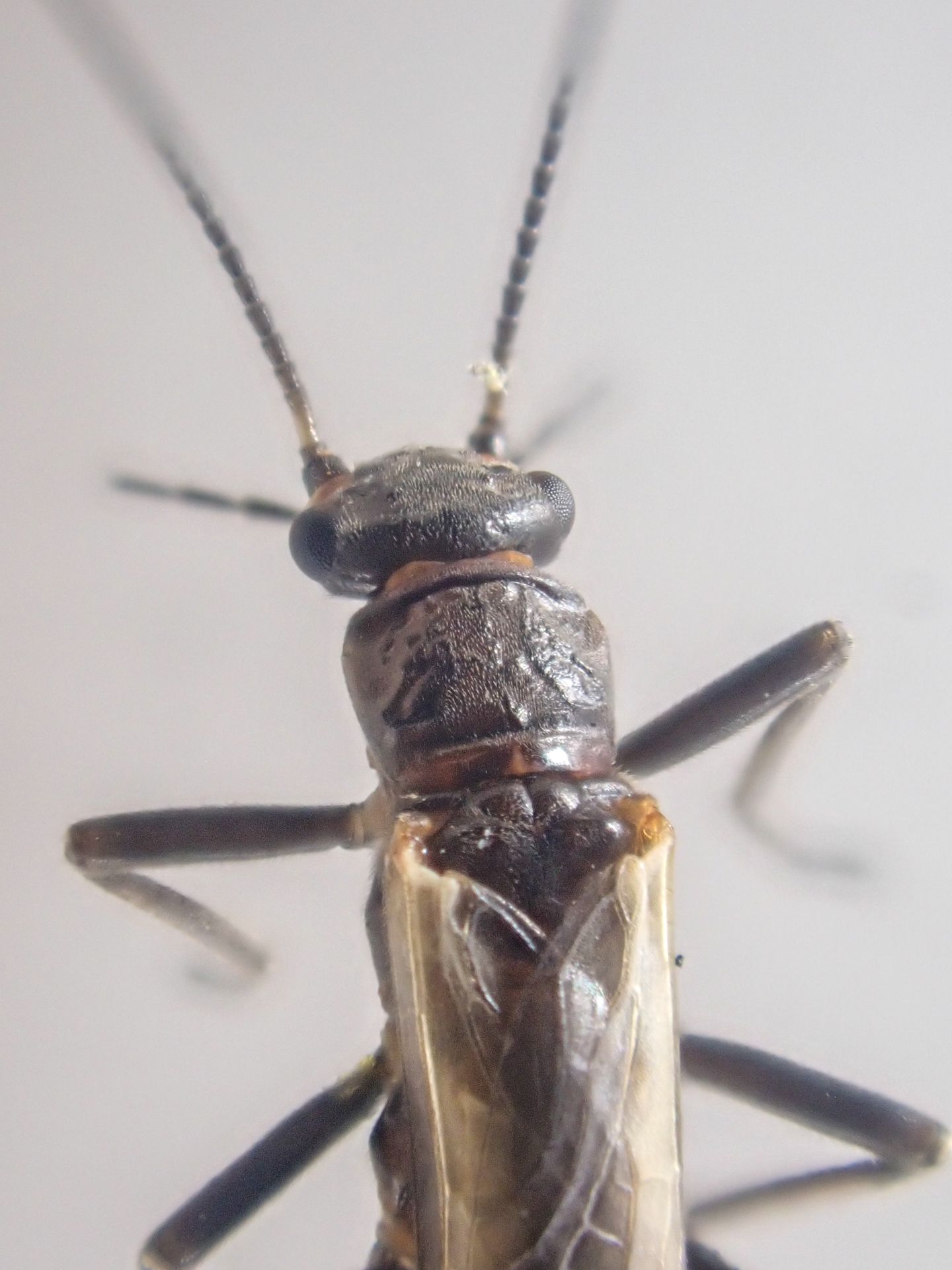
Moselia zonata is a of in the Leuctridae, commonly known as the Banded-wing Needlefly. The species was described by Stark & Harrison in 2016. It belongs to the order Plecoptera, a group of aquatic insects whose stages (nymphs) develop in freshwater environments. The specific epithet 'zonata' refers to banded or zoned wing patterns characteristic of this species.
Pronunciation
How to pronounce Moselia zonata: /moʊˈsiːliə zoʊˈnætə/
These audio files are automatically generated. While they are not always 100% accurate, they are a good starting point.
Identification
Distinguished from other Moselia by the banded (zonate) wing pattern. Leuctridae members can be separated from other Plecoptera families by the reduced wing venation and the way hindwings fold fan-like beneath the forewings. Within the Moselia, M. zonata is recognized by its distinct wing banding; other species in the genus may have clear or differently patterned wings. Identification to species level requires examination of wing patterns and likely genitalic structures.
Images
Habitat
Associated with freshwater stream environments. Nymphs inhabit cool, well-oxygenated running waters, typically clinging to rocks, woody debris, or other substrates in the streambed. are found near streams where they emerge.
Distribution
Recorded from California, Nevada, and Oregon in the western United States. The appears to have a restricted range within the Pacific coastal and interior mountain regions of the western U.S.
Life Cycle
Hemimetabolous development with , nymph, and stages. Nymphs are aquatic and undergo multiple instars before emerging as winged adults. Specific details of voltinism (number of per year) and timing are not documented.
Behavior
are typically and found near streams. Nymphs are clingers in flowing water, using their flattened bodies and strong legs to maintain position on substrates.
Ecological Role
Nymphs function as or gatherers in stream , processing allochthonous organic matter. They serve as prey for fish and other aquatic . provide food for terrestrial .
Similar Taxa
- Other Moselia speciesSimilar body form and use; distinguished by wing pattern (clear or differently marked wings versus the banded pattern of M. zonata)
- Other Leuctridae genera (e.g., Leuctra, Perlomyia)Share reduced wing venation and characteristics; separated by genitalic and detailed wing venation patterns
- Nemouridae (other needlefly families)Similar small ; distinguished by wing folding pattern and venation details
More Details
Taxonomic history
Described in 2016 by Stark & Harrison, indicating this is a relatively recently described within the diverse Leuctridae of western North America.
Conservation status
No specific conservation status has been assigned; the is known from relatively few records (32 iNaturalist observations as of source date).