
Pseudosermyle strigata
(Scudder, 1900)
Striped Walkingstick
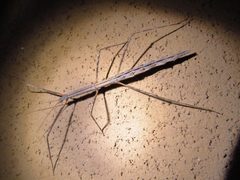
Pseudosermyle strigata, commonly known as the striped walkingstick, is a of phasmid in the Diapheromeridae. It is native to North America, with documented occurrences in the southeastern United States. The species was described by Scudder in 1900. Like other walkingsticks, it exhibits cryptic resembling plant material.
Pronunciation
How to pronounce Pseudosermyle strigata: /ˌpsjuːdoʊˈsɜːrmaɪli strɪˈɡeɪtə/
These audio files are automatically generated. While they are not always 100% accurate, they are a good starting point.
Identification
Positive identification requires examination of morphological characters not detailed in general sources. The may be distinguished from other Pseudosermyle species by subtle differences in body proportions, antennal segment count, or genitalic structures, but these features require knowledge and reference to original taxonomic literature.
Images
Habitat
Specific preferences are not documented. As a member of Diapheromeridae, it likely inhabits wooded or shrubby environments where plants are available.
Distribution
Documented from the southeastern United States, specifically: Alabama, Arkansas, Louisiana, Mississippi, and Texas.
Similar Taxa
- Pseudosermyle phalangiphoraA congeneric in the same , likely sharing similar body plan and preferences in North America.
- Diapheromera femorataAnother diapheromerid walkingstick found in eastern North America; differs in distribution and presumably in details of body shape and coloration.
- Anisomorpha buprestoidesA larger diapheromerid walkingstick with chemical defense capabilities and more robust body form; differs in possessing prominent stripes and defensive spray glands.
More Details
Taxonomic history
The was originally described by Samuel Hubbard Scudder in 1900. The Pseudosermyle contains multiple North American species, though comprehensive modern revisions are limited.
Data availability
Despite 122 observations recorded on iNaturalist as of the source date, detailed biological and ecological information for this remains sparse in the scientific literature.
Sources and further reading
- BugGuide
- Wikipedia
- GBIF taxonomy match
- iNaturalist taxon
- Catalogue of Life
- Destination Hutchison Island, Florida: a visit with the Twostriped walkingstick, 'Anisomorpha buprestoides' — Bug of the Week
- From the Bug of the Week mailbag: World’s largest walking stick visits the Goddard Space Flight Center, Northern walkingstick, Diapheromera fermorata — Bug of the Week
- Bug Eric: Blacklighting Already?
- longhorned beetles | Beetles In The Bush | Page 10