
Hubbellia
Hebard, 1927
Species Guides
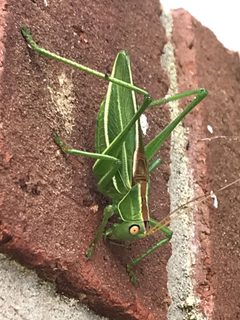
1- Hubbellia marginifera(Arboreal Pine Katydid)
Hubbellia is a of shield-backed katydids in the Tettigoniidae, established by Hebard in 1927. The sole described , H. marginifera, is among the rarest katydids in the United States, with approximately 40 specimens collected despite over a century of entomological work. Its extreme rarity and arboreal habits have made it a notable subject for orthopteran researchers.
Pronunciation
How to pronounce Hubbellia: //hʌˈbɛliə//
These audio files are automatically generated. While they are not always 100% accurate, they are a good starting point.
Identification
As a shield-backed katydid, members of this possess the characteristic enlarged, shield-like pronotum that extends backward over the , distinguishing them from other groups. The single H. marginifera can be distinguished from other Tettigoniinae by specific margin features referenced in its epithet, though precise diagnostic characters require examination of .
Images
Habitat
Pine tree in southeastern United States forests. The arboreal lifestyle and height of preferred contribute to its rarity in collections.
Distribution
Southeastern United States: Alabama, Florida, Georgia, Mississippi, and North Carolina.
Host Associations
- Pinus - lives in of pine trees
Behavior
Arboreal; occupies upper of pine trees, which contributes to difficulty in detection and collection.
Human Relevance
Of interest to entomologists and collectors due to its extreme rarity; one of the most rarely encountered in the United States.
Similar Taxa
- Other Tettigoniinae generaSimilar shield-backed , but distinguished by specific pronotal and margin characteristics in H. marginifera
- Other katydid subfamiliesShield-backed katydids differ in having enlarged pronotum covering , unlike meadow katydids (Conocephalinae) or bush katydids (Phaneropterinae)
More Details
Taxonomic history
The was established by Morgan Hebard in 1927. Despite its description nearly a century ago, the single remains poorly known due to collection difficulties.