
Platylyra californica
Scudder, 1898
California Chaparral Katydid
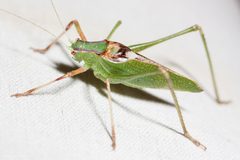
Platylyra californica is a to California, commonly known as the California Chaparral Katydid. It belongs to the Tettigoniidae and is associated with chaparral and coastal scrub . The species was described by Scudder in 1898 and has been documented in over 1,100 iNaturalist observations, indicating it is relatively well-recorded within its restricted range.
Pronunciation
How to pronounce Platylyra californica: /ˌplætɪˈlaɪrə ˌkælɪˈfɔrnɪkə/
These audio files are automatically generated. While they are not always 100% accurate, they are a good starting point.
Identification
The Platylyra is characterized by broad, flattened forewings—reflected in its name meaning 'broad lyre.' Within Phaneropterinae, Platylyra californica can be distinguished from related genera by this wing . Specific diagnostic features for separating it from other Phaneropterinae in California require examination of male genitalia and stridulatory structures.
Images
Habitat
Chaparral and coastal scrub vegetation in California. The and iNaturalist observation patterns suggest strong association with Mediterranean-type shrubland .
Distribution
to California, United States. GBIF records confirm presence in California with North American distribution documented as present. No records outside this region are established.
Similar Taxa
More Details
Taxonomic history
Described by Samuel Hubbard Scudder in 1898, a prominent American entomologist specializing in Orthoptera. The specific epithet 'californica' reflects the state's status.
Observation frequency
With 1,174 iNaturalist observations as of source date, this is among the more frequently documented katydids in California, though this may reflect observer concentration in urbanized areas rather than true abundance.
Sources and further reading
- BugGuide
- GBIF taxonomy match
- iNaturalist taxon
- NCBI Taxonomy
- Catalogue of Life
- The Big 43: The California Native Plants, Plus One, Studied in UC Davis Research | Bug Squad
- Bohart Museum: Learn about California's State Insect on UC Davis Picnic Day | Bug Squad
- A Mural Like No Other | Bug Squad
- A Flash of Orange: Welcome, California Tortoiseshell! | Bug Squad
- California Dogface Butterfly: What the Fire Did | Bug Squad
- Bembicid Holdings | Entomology Research Museum