
Neotettix proavus
Rehn & Hebard, 1916
fork-face pygmy grasshopper, fork-face grouse locust
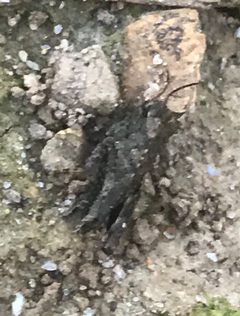
Neotettix proavus is a of pygmy in the Tetrigidae, characterized by its small size and distinctive facial structure. The species was described by Rehn & Hebard in 1916 and is known from a limited number of observations. It belongs to a group of ground-dwelling orthopterans commonly referred to as grouse locusts or pygmy grasshoppers.
Pronunciation
How to pronounce Neotettix proavus: //niːˈoʊtɛtɪks proʊˈeɪvəs//
These audio files are automatically generated. While they are not always 100% accurate, they are a good starting point.
Identification
The 'fork-' suggests a distinctive facial or cephalic structure, likely referring to a or notched fastigium of the vertex, a trait used to distinguish Neotettix . Members of this are small-bodied with the pronotum extending backward over the , a characteristic of Tetrigidae. Specific diagnostic features for N. proavus require examination of or original description.
Images
Distribution
Recorded from the southeastern United States (Florida, Georgia, Tennessee) and northeastern Mexico. The sparse observation record suggests either restricted range, cryptic habits, or under-sampling.
Similar Taxa
- Neotettix femoratusCongeneric with overlapping southeastern U.S. distribution; distinguished by details of pronotal and facial
- Neotettix cristatusAnother Neotettix ; separation based on fastigial and pronotal shape characters
More Details
Taxonomic note
The Neotettix contains multiple North American , many of which are poorly known and difficult to identify without reference to original descriptions. The specific epithet 'proavus' (Latin for 'ancestor' or 'forefather') may allude to perceived primitive characteristics.
Data deficiency
With only one observation in iNaturalist and limited GBIF records, this appears to be rarely encountered or reported, possibly due to its small size and ground-dwelling habits rather than genuine rarity.