
Tetriginae
Rambur, 1838
groundhoppers, pygmy grasshoppers
Genus Guides
5- Clypeotettix
- Neotettix(pygmy grasshoppers)
- Nomotettix(pygmy grasshoppers)
- Paratettix(ground-hoppers)
- Tetrix(ground-hoppers)
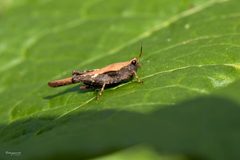
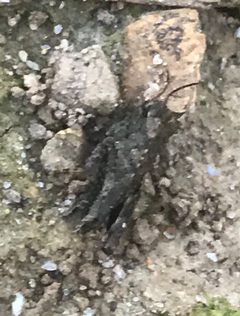
Tetriginae is a large of pygmy grasshoppers ( Tetrigidae) characterized by small body size, with most measuring approximately one centimetre in length. The subfamily has been documented on every continent except Antarctica and contains more than 2000 described across multiple tribes including Tetrigini and Dinotettigini. Members of this subfamily are distinguished by their elongated pronotum, which often extends backward over the and frequently exhibits extreme morphological modifications including spines, horns, warts, or leaf-like expansions. The lineage has persisted for over 230 million years, predating and surviving the extinction of dinosaurs. Despite this ancient origin, many species remain poorly known, with the majority of research focused on temperate representatives in Europe and North America rather than tropical diversity.
Pronunciation
How to pronounce Tetriginae: //tɛˈtrɪdʒɪniː//
These audio files are automatically generated. While they are not always 100% accurate, they are a good starting point.
Identification
Distinguishable from other Tetrigidae by combinations of: antennal groove position relative to margin; frontal bifurcation height; pronotal modifications (spines, horns, leaf-like expansions); robustness (length/width ratio); scutellum ; and prozonal carinae visibility. From Metrodorinae and other subfamilies: Tetriginae typically lacks the extreme antennal specializations seen in some Metrodorinae (e.g., Ophiotettix). -level identification requires examination of pronotal structure, genitalia, and specific body proportions.
Images
Appearance
are minute, typically approximately 1 cm in length. The pronotum is elongated and extends posteriorly over the , often with extreme modifications including spines, horns, warts, undulations, or leaf-like expansions that create grotesque or bizarre appearances. Antennal grooves are positioned at variable levels relative to the . The frontal bifurcates at different heights depending on . range from robust to slender. The scutellum and prozonal carinae visibility vary among species and serve as diagnostic characters. Some species exhibit bright coloration, particularly in Madagascar.
Habitat
Occurs in diverse environments including leaf litter, moist ground near ponds and streams, river banks, and forest floors. Some are associated with water-dependent . In Nepal, different species occupy distinct habitat types: subtropical Sal forest versus river/stream/pond banks. Madagascar species inhabit rainforest . Many species are ground-dwelling in moist microhabitats.
Distribution
Global distribution on every continent except Antarctica. Tribes show regional patterns: Dinotettigini recorded from tropical Africa, India, and Philippines; Tetrigini widespread; numerous in Madagascar, New Guinea, Borneo, Australia, and Taiwan. Well-documented species concentrated in Europe and North America, though these represent only about 2% of total diversity. Tropical regions contain the majority of undocumented diversity.
Behavior
Capable of jumping despite small size. Some , including those with large pronotal spines, have been observed to fly skillfully in rainforest . has been demonstrated to be influenced by light conditions. Courtship may involve visual signals including antennal movements and coloration, particularly in New Guinean species with elaborate .
Human Relevance
Subject of taxonomic research with numerous new described from tropical regions. Frequently misidentified by amateur naturalists as insects due to small size. iNaturalist platform has become significant source of distributional data and discovery of new records for rare species. Some species are considered endangered.
Similar Taxa
- MetrodorinaeAnother of Tetrigidae; distinguished by Tetriginae typically lacking extreme antennal modifications and certain pronotal specializations characteristic of Metrodorinae
- Batrachideinae of Tetrigidae with different pronotal and genitalic
Misconceptions
are commonly mistaken for insects of other Orthoptera due to their minute size (approximately 1 cm), leading to underreporting and misidentification in field observations.
More Details
Taxonomic diversity
Contains at least 4 and 20 described according to conservative estimates, but total diversity exceeds 2000 species across the Tetrigidae with Tetriginae representing a substantial portion. Major tribes include Tetrigini (Rambur, 1838) and Dinotettigini (Günther, 1979).
Research bias
Approximately 98% of occurs in tropical regions, yet most ecological and natural history research has focused on the 2% of in Europe and North America, particularly Tetrix and Paratettix .
Evolutionary persistence
The Tetrigidae, including Tetriginae, has persisted for over 230 million years, surviving mass extinctions that eliminated non-avian dinosaurs.
Sources and further reading
- BugGuide
- Wikipedia
- iNaturalist taxon
- NCBI Taxonomy
- Catalogue of Life
- The mini grasshoppers that outlived dinosaurs: the fascinating world of Tetrigidae | Blog
- A new pygmy grasshopper species (Tetrigidae: Tetriginae) from Central India
- On the specific status of Hedotettix cristatus Karny, 1915 (Tetrigidae: Tetriginae)
- Experiments with Light upon Reproduction, Growth and Diapause in Grouse Locusts (Acrididae, Tetriginae)
- A new genus and a new groundhopper species from Nepal (Orthoptera: Tetriginae: Skejotettix netrajyoti gen. et sp. nov.)