
Chloealtis
Harris, 1841
slant-faced grasshoppers
Species Guides
5- Chloealtis abdominalis(Rocky Mountain Sprinkled Locust)
- Chloealtis aspasma(Siskiyou Short-horned Grasshopper)
- Chloealtis conspersa(sprinkled grasshopper)
- Chloealtis dianae(Diana black-side grasshopper)
- Chloealtis gracilis(graceful slant-face grasshopper)
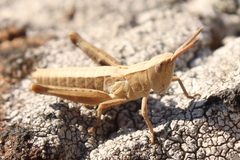
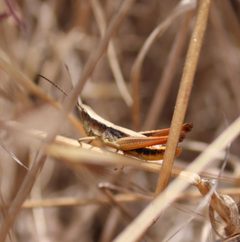
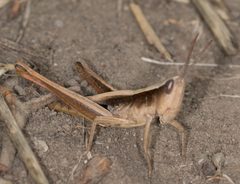
Chloealtis is a of slant-faced grasshoppers in the Acrididae, containing approximately five described . Species in this genus are associated with forested and mountainous in western North America. The genus has been studied extensively for its unusual meiotic , particularly regarding synaptonemal complex formation and nuclear envelope attachment during division.
Pronunciation
How to pronounce Chloealtis: //kloʊ.iˈæl.tɪs//
These audio files are automatically generated. While they are not always 100% accurate, they are a good starting point.
Identification
Members of Chloealtis can be recognized as slant-faced grasshoppers, a group characterized by an inclined or sloping facial profile. The belongs to the tribe Chrysochraontini within the Gomphocerinae. Specific identification to level requires examination of detailed morphological characters not documented in available sources.
Images
Habitat
Forest openings and low brush in mountainous regions; specifically documented in ponderosa pine-grassland and small forest clearings. Two (C. abdominalis and C. conspersa) are recorded from the Black Hills, Big Horn Mountains, and Medicine Bow Mountains of Wyoming.
Distribution
Western North America. Documented occurrences include Wyoming (Black Hills, Big Horn Mountains, Medicine Bow Mountains), Colorado, and additional records from California, Illinois, Indiana, and Massachusetts. Distribution is primarily associated with montane and submontane zones.
Seasonality
present from mid-July to September. overwinter and hatch in spring.
Diet
Grasses. Chloealtis conspersa has been observed to prefer bluegrass (Poa ).
Life Cycle
are laid in soft wood on the ground, occasionally in soil or dry . Eggs overwinter, with hatching in spring. Development proceeds through nymphal stages to in mid-summer.
Ecological Role
Herbivore in forest-grassland . Low densities prevent significant competition for rangeland forage.
Human Relevance
Minimal economic impact; are rarely abundant enough to cause forage damage except in combination with other .
Similar Taxa
- ChorthippusBoth are Gomphocerinae grasshoppers with similar preferences in western North America; Chorthippus is more widely distributed and contains more
- PseudopomalaShares slant-faced and western montane distribution; distinguished by wing and pronotal characteristics
- StenobothrusOverlapping distribution in western mountains; Stenobothrus typically prefer more open grassland
Sources and further reading
- BugGuide
- Wikipedia
- GBIF taxonomy match
- iNaturalist taxon
- NCBI Taxonomy
- Catalogue of Life
- Chloealtis abdominalis
- Sprinkled Grasshopper
- Grasshoppers of Colorado
- Grasshoppers of Colorado
- Species Records and Accounts
- Grasshoppers of Colorado
- Chromosome core attachment to the meiotic nuclear envelope regulates synapsis in Chloealtis (Orthoptera)
- The distribution of synaptonemal complex material in metaphase I bivalents of Locusta and Chloealtis (Orthoptera: Acrididae)