
Bootettix
Bruner, 1889
creosote bush grasshoppers
Species Guides
1- Bootettix argentatus(Creosote Bush Grasshopper)
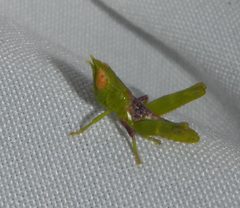
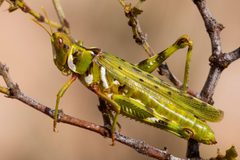
Bootettix is a of slant-faced grasshoppers in the Acrididae, first described by Bruner in 1889. The genus contains at least two described , including Bootettix argentatus, commonly known as the creosote bush grasshopper. Species in this genus are associated with arid environments in southwestern North America. The genus is classified within the Gomphocerinae and tribe Acrolophitini.
Pronunciation
How to pronounce Bootettix: //buːˈtɛtɪks//
These audio files are automatically generated. While they are not always 100% accurate, they are a good starting point.
Identification
Members of Bootettix can be distinguished from other Acrididae by their placement in the tribe Acrolophitini. Bootettix argentatus is specifically associated with creosote bush (Larrea tridentata), which may aid in field identification. The slant-faced characteristic of Gomphocerinae is present. -level identification requires examination of morphological characters described in original species descriptions.
Images
Habitat
Arid and semi-arid regions of southwestern North America. Bootettix argentatus is specifically associated with creosote bush (Larrea tridentata)-dominated .
Distribution
Southwestern United States (Arizona, California) and northeastern Mexico.
Diet
Bootettix argentatus feeds on creosote bush (Larrea tridentata). Diet of Bootettix joerni is not documented in available sources.
Host Associations
- Larrea tridentata - food plantcreosote bush; primary of Bootettix argentatus
Similar Taxa
- Other AcrolophitiniShare tribal classification; -level distinction requires detailed morphological examination
- Other GomphocerinaeShare -level slant-faced ; distinguished by tribal and generic characters
More Details
Species composition
The contains at least two described : Bootettix argentatus Bruner, 1890 and Bootettix joerni Otte, 1979. Additional undescribed species may exist.
Taxonomic history
Authorship is sometimes cited as Bruner, 1889. The has been consistently placed in Gomphocerinae, though tribal placement in Acrolophitini reflects more recent phylogenetic work.