Archilestes
Selys, 1862
Stream Spreadwings
Species Guides
2- Archilestes californicus(California Spreadwing)
- Archilestes grandis(Great Spreadwing)
Archilestes is a of large in the Lestidae, commonly known as stream spreadwings. The genus contains eight distributed exclusively in the Americas, with A. grandis and A. californicus being the most widespread. Members are distinguished from other spreadwings by their robust build, tan to brown coloration without metallic highlights, and distinctive wing-spreading resting posture.
Pronunciation
How to pronounce Archilestes: /ˌɑːrkɪˈlɛstiːz/
These audio files are automatically generated. While they are not always 100% accurate, they are a good starting point.
Identification
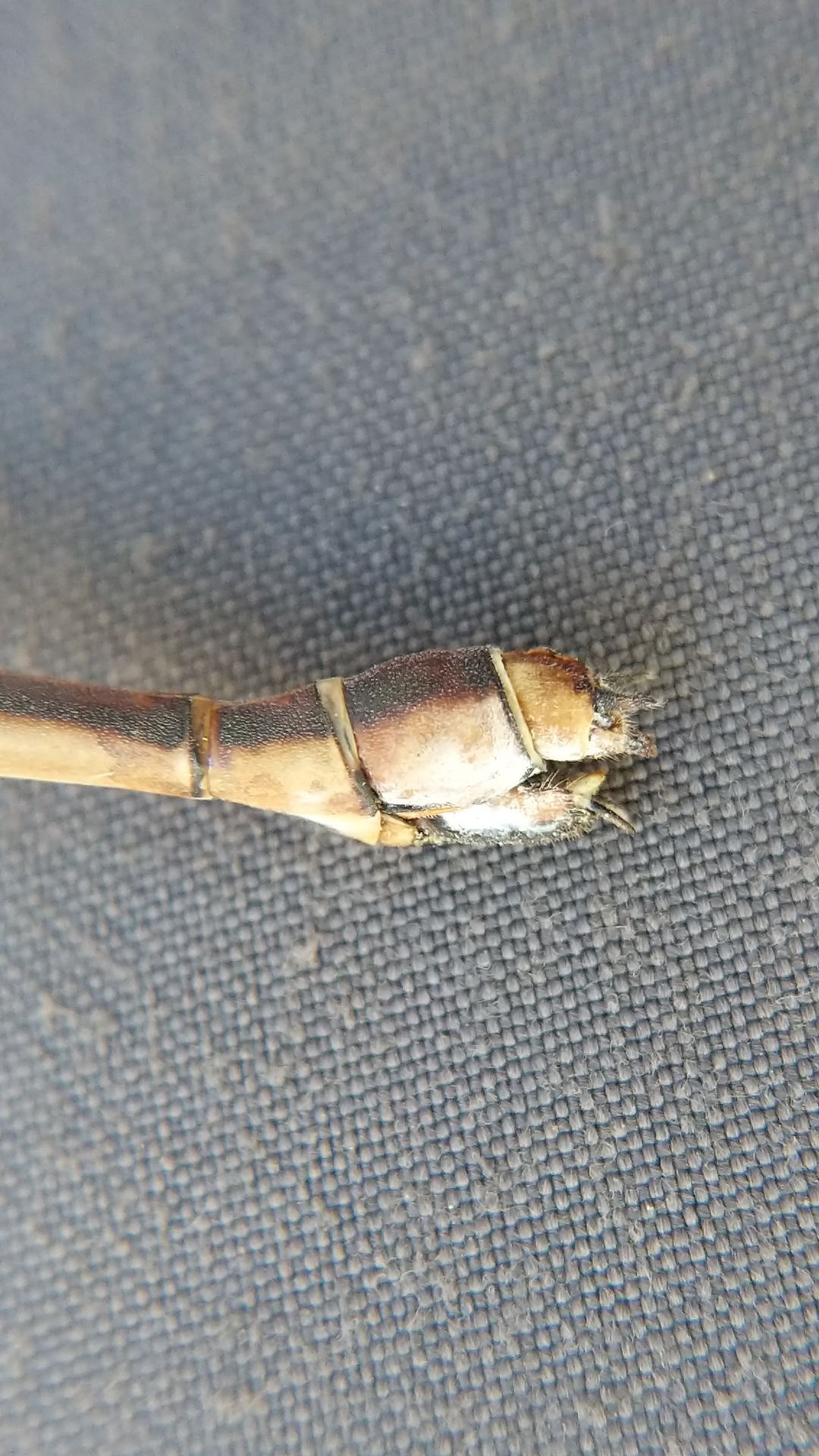
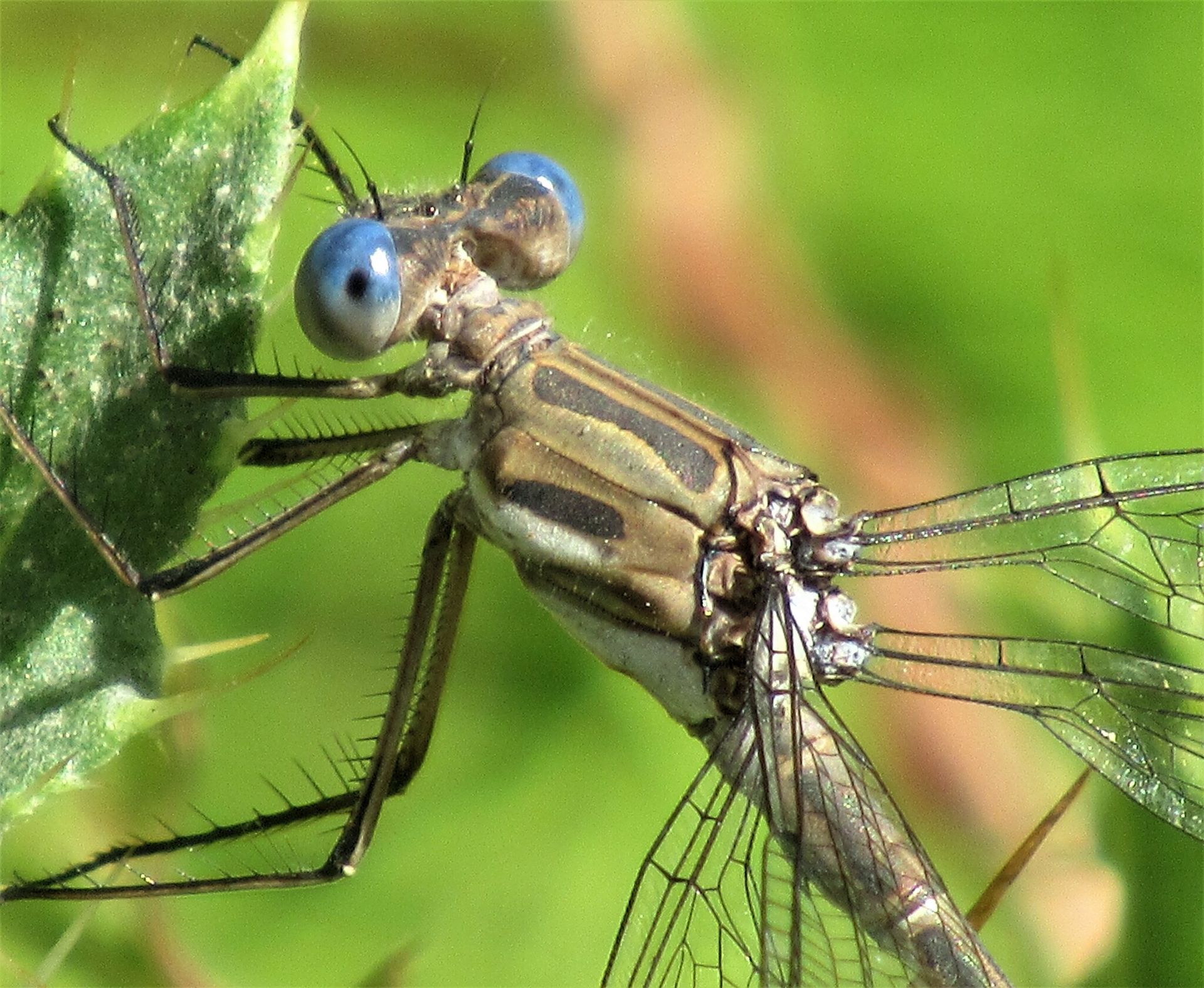
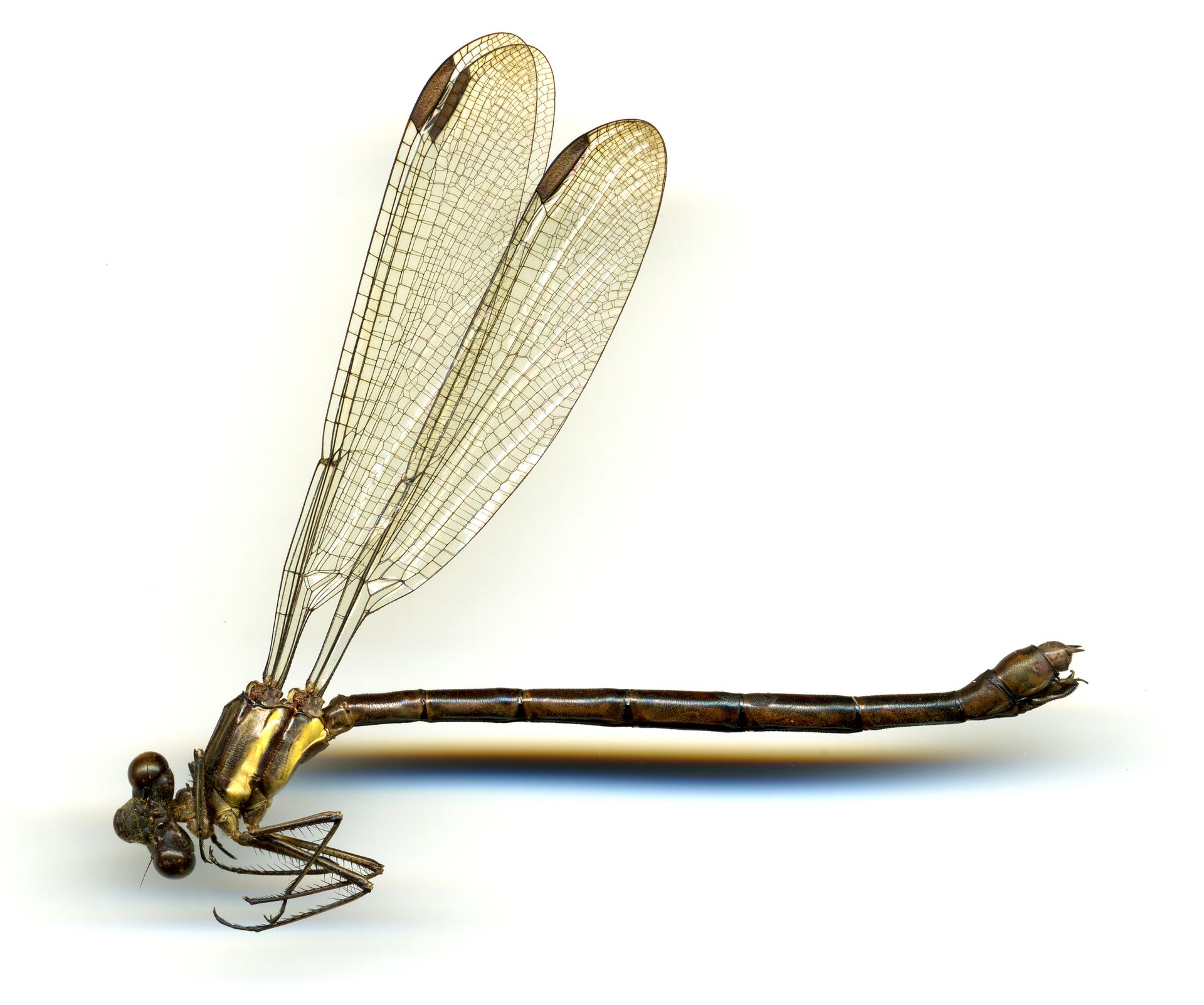
Distinguished from other Lestidae by larger size (41–60 mm), more robust build, relatively short wings, and absence of metallic bronze or green coloration. Males identified by blue and pincer-like terminal appendages. The wing-spreading resting posture is shared with other Lestidae but differs from most that fold wings together above the .
Images
Appearance
range from 41 to 60 mm in length, making them among the largest . They have a robust build with relatively short wings compared to their elongated . Coloration is tan to brown with black markings; they lack the metallic bronze or green highlights seen in the related Lestes. Males have blue and pincer-like terminal abdominal appendages. Females have brown eyes, a more rounded abdominal tip, and a well-developed ovipositor. Naiads (larvae) are long and slender, 25–30 mm, dark brown with a light stripe along the center of the abdomen.
Habitat
Found near slow-moving streams with overhanging alder or willow trees, as well as wetlands, ponds, and temporary pools. Breeds in heavily vegetated water gardens with unpolluted water. Naiads inhabit pools and backwaters.
Distribution
Restricted to the Americas. A. grandis and A. californicus occur in North and Central America; A. grandis has expanded northward and eastward since the 1920s. Several to Central America (A. latialatus, A. neblina, A. regalis, A. tuberalatus). A. exoletus and A. guayaraca occur in South America.
Diet
are of small flying insects. Naiads prey on aquatic including mosquito larvae, larvae, and freshwater shrimp.
Life Cycle
Females oviposit in woody stems and plant tissue overhanging water, not in aquatic vegetation. laid in tandem with male clasping female; up to 230 eggs laid over 15 minutes to 3 hours. Naiads are active underwater hunters and vigorous swimmers; some float near the water surface for extended periods. Naiads can be observed in winter basking in sun-warmed shallow water. live approximately six months after .
Behavior
Rest with wings spread at an angle to the body, the characteristic posture of Lestidae. May close wings during poor weather, nightfall, threat, or male harassment of females. Males perch over water and defend small territories, seizing females upon arrival. When startled, individuals often return to the same perch or a nearby one.
Ecological Role
as and larvae; naiads may contribute to mosquito control through on larvae.
Human Relevance
Readily breeds in water gardens with unpolluted water. A. grandis is common over much of the U.S. and may be mistaken for a due to its large size.
Similar Taxa
More Details
Range expansion
A. grandis has expanded its range northward and eastward since the 1920s
Winter activity
Naiads can sometimes be observed in winter, basking in sun-warmed shallow water