
Amphiagrion
Selys, 1876
Red Damsels
Species Guides
2- Amphiagrion abbreviatum(Western Red Damsel)
- Amphiagrion saucium(Eastern Red Damsel)
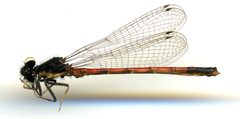
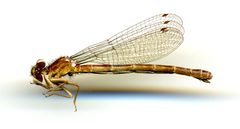
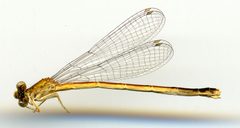
Amphiagrion is a of small in the Coenagrionidae, to North America. The genus contains two recognized : Amphiagrion abbreviatum (western red damsel) and Amphiagrion saucium (eastern red damsel). Males exhibit bright red coloration with black markings; females are duller. The genus is notable for its association with geothermal springs and specific perching site requirements.
Pronunciation
How to pronounce Amphiagrion: //æm.faɪˈæɡ.ri.ɒn//
These audio files are automatically generated. While they are not always 100% accurate, they are a good starting point.
Identification
Distinguished from other North American by the combination of small size, bright red male coloration with black markings, and association with specific types. The two within the are separated geographically: A. abbreviatum in western North America, A. saucium in eastern North America. Differentiated from co-occurring Argia vivida by perching and habitat use patterns.
Images
Appearance
Small with slender bodies. Males bright red with black markings; females duller in coloration. Specific morphological details beyond color dimorphism are not documented in available sources.
Habitat
Geothermal springs and associated aquatic environments. Open areas with trees present; absent from dense woodlands due to scarcity of suitable daytime perching sites. Specific microhabitat requirements include appropriate perching substrates for daytime activity.
Distribution
North America. Western red damsel (A. abbreviatum): western Canada and United States. Eastern red damsel (A. saucium): eastern North America.
Behavior
perching on exposed substrates. Roosts at night at lower heights than sympatric Argia vivida, with body held at a smaller angle from the perch surface. Absence from heavily treed areas associated with scarcity of appropriate daytime perching sites. Experiences competitive pressure from Argia vivida for available perches at shared sites.
Similar Taxa
- Argia vividaFrequently co-occurs at geothermal springs in western North America; distinguished by higher nighttime roosting position, greater body angle from perch surface, and requirement for trees as night roosts
More Details
Geothermal spring association
Amphiagrion abbreviatum has been documented inhabiting geothermally heated springs, where water temperature and conductivity do not directly determine its abundance relative to co-occurring