
Tachopteryx
Uhler in Selys, 1859
gray petaltail, Thorey's grayback
Species Guides
1- Tachopteryx thoreyi(Gray Petaltail)
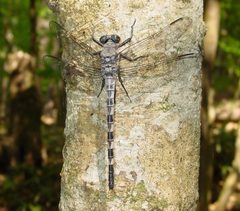
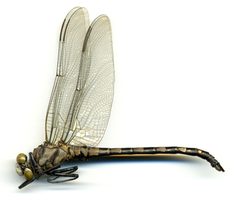
Tachopteryx is a of in the Petaluridae, containing only Tachopteryx thoreyi. This is notable for having a non-burrowing larval stage, unlike most other petalurids. are medium-sized dragonflies with distinctive gray and black coloration.

Pronunciation
How to pronounce Tachopteryx: /təkˈɒptərɪks/
These audio files are automatically generated. While they are not always 100% accurate, they are a good starting point.
Identification
The entirely gray combined with gray and black distinguishes from other petalurids. The non-burrowing larval habit is unique among Petaluridae and can be identified by the presence of shallow larval pits or crypts rather than deep burrows.
Images
Habitat
inhabit highlands, woodlands, and deciduous forests with permanent seeps. Larvae occur in shallow pits or crypts in groundwater-dependent , often associated with skunk cabbage and ferns as indicators of seep presence.
Distribution
East Coast of the United States from New York south to Florida, and west to Texas.
Life Cycle
Larval stage is non- (non-burrowing), contrasting with the typical burrowing habit of other petalurid . Larvae establish shallow pits or crypts as modification rather than constructing deep burrows.
Behavior
Larvae engage in modification by establishing crypts or shallow depressions in substrate. This represents an intermediate or modified behavioral state between non-burrowing and the typical burrowing habit characteristic of other petalurids.
Similar Taxa
- Other Petaluridae generaMost other petalurids have (burrowing) larvae that construct deep burrows, whereas Tachopteryx larvae are non-burrowing and create only shallow pits
More Details
Larval biology
Tachopteryx thoreyi is one of only two petalurid known to have a non- larval stage, making it exceptional within a characterized by burrowing larvae