
Tachopteryx thoreyi
(Hagen, 1858)
Gray Petaltail, Thorey's Grayback
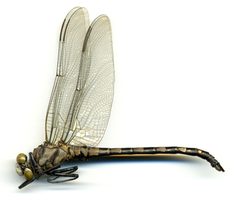
Tachopteryx thoreyi, commonly known as the gray petaltail, is a native to the eastern United States. It is the sole member of the Tachopteryx. Unlike most petalurid dragonflies, which have (burrowing) larvae, T. thoreyi larvae are non-burrowing and instead establish shallow pits or depressions called crypts. This represents a unique case of modification within the .


Pronunciation
How to pronounce Tachopteryx thoreyi: /tæˈkɒptɪrɪks ˈθɔːreɪ.aɪ/
These audio files are automatically generated. While they are not always 100% accurate, they are a good starting point.
Identification
Distinguished from other petalurid by its non-burrowing larval habit; larvae create shallow surface crypts rather than deep burrows. As the only in its , may be identified by genus-level characteristics combined with geographic distribution on the East Coast of the United States.
Images
Habitat
Larval consists of shallow pits or depressions (crypts) in substrates, representing modified habitat rather than deep burrows. Specific substrate types and habitat preferences are not documented in available sources.
Distribution
Native to the East Coast of the United States, ranging from New York south to Florida and west to Texas.
Life Cycle
Larval stage is non-. Larvae establish shallow pits or depressions (crypts) in substrate, contrasting with the burrowing habit typical of other petalurid . Details of deposition, larval development duration, and patterns are not documented in available sources.
Behavior
Larvae engage in modification by establishing crypts or shallow pits/depressions. This non-burrowing is unique among petalurid and represents a distinct ecological strategy within the .
More Details
Taxonomic uniqueness
Tachopteryx thoreyi is the only in the Tachopteryx, making it phylogenetically distinctive within Petaluridae.
Evolutionary significance of larval behavior
The non-burrowing, crypt-establishing of T. thoreyi larvae represents one of only two known cases of non- larval development in Petaluridae, offering potential insights into the evolution of burrowing behavior in odonates.