
Macrodiplax
Brauer, 1868
Coastal Pennants
Species Guides
1- Macrodiplax balteata(Marl Pennant)
Macrodiplax is a of in the Libellulidae, commonly known as Coastal Pennants. The genus contains only two and is distributed across tropical and subtropical regions worldwide, with the notable exception of Africa. Members of this genus are characterized by their coastal preferences and distinctive wing markings.
Pronunciation
How to pronounce Macrodiplax: /mæ.kroʊˈdɪˌplæks/
These audio files are automatically generated. While they are not always 100% accurate, they are a good starting point.
Identification
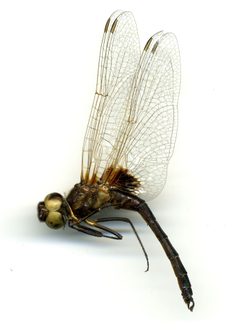
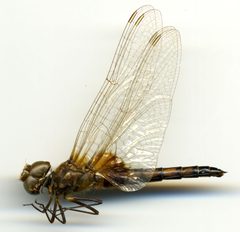
Macrodiplax can be distinguished from other Libellulidae by their coastal association combined with specific wing patterning. The genus is most readily identified by the presence of dark basal wing markings, particularly on the hindwings, which appear as distinct patches or bands. The slender and perching posture on exposed vegetation near shorelines further aid in field identification. Separation from the related genus Brachydiplax requires careful examination of wing venation and the extent of pigmentation.
Images
Habitat
Strictly associated with coastal environments, including salt marshes, mangroves, estuaries, and saline lagoons. Occupies with standing or slow-moving brackish water. Frequently perches on emergent vegetation or bare ground in open, sun-exposed areas near water edges.
Distribution
Pantropical and subtropical distribution spanning the Americas, Asia, Australia, and Pacific islands. Absent from the African continent. Present in coastal regions of the southeastern United States, Caribbean, Central and South America, South and Southeast Asia, and northern Australia.
Behavior
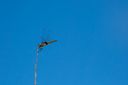
are strong fliers that patrol territories over brackish water. Frequently observed perching on exposed substrates with wings held horizontally or slightly forward. Males engage in aerial territorial defense. Tandem mating and oviposition in tandem have been observed, with females depositing into water or moist substrates while guarded by males.
Ecological Role
Functions as a mid-level in coastal aquatic , consuming small flying insects. Serves as prey for birds, fish, and larger odonates. Its restriction to saline-influenced makes it an for coastal integrity.
Human Relevance
Of minor direct economic importance. Occasionally encountered by coastal ecologists and odonate enthusiasts. Presence indicates healthy brackish water with minimal pollution.
Similar Taxa
- BrachydiplaxSimilar size and wing markings, but Brachydiplax generally inhabit freshwater environments and lack the pronounced coastal specialization of Macrodiplax. Wing venation and genitalia differ structurally.
- DiplacodesShares Libellulidae and similar body proportions, but Diplacodes typically have different wing patterning with more extensive coloration and occupy broader types including inland waters.
More Details
Species Diversity
The is notably -poor, containing only two recognized species: Macrodiplax balteata (Marl Pennant) and Macrodiplax cora (Cora's Pennant). This restricted diversity contrasts with the large, genera within Libellulidae.
Saline Tolerance
Macrodiplax represents one of the few odonate specialized for brackish and saline , reflecting physiological adaptations to osmotic stress not common in the order.