
Leucorrhinia proxima
Calvert, 1890
Belted Whiteface, Red-waisted Whiteface
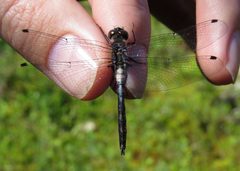
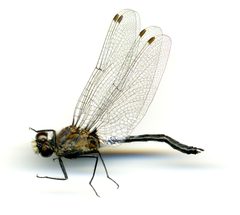
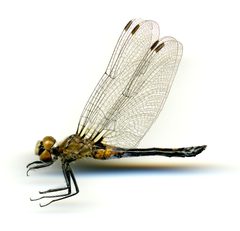
Leucorrhinia proxima, known as the belted whiteface or red-waisted whiteface, is a in the Libellulidae. It occurs across and temperate regions of North America, from Alaska through Canada to the northern United States. The refers to distinctive pale markings on the and reddish coloration at the base.
Pronunciation
How to pronounce Leucorrhinia proxima: //luː.kɔːˈrɪ.ni.ə ˈprɒk.sɪ.mə//
These audio files are automatically generated. While they are not always 100% accurate, they are a good starting point.
Identification
The can be distinguished from by the combination of a pale (white or cream) and reddish coloration at the base of the . The specific epithet "proxima" and "belted whiteface" and "red-waisted whiteface" suggest these diagnostic color patterns. It is smaller than many Libellulidae species, with a compact body typical of the Leucorrhinia.
Images
Distribution
Found across Canada from Alaska eastward, and south to northern parts of the United States. Records include Vermont and other northern U.S. states. The range spans and temperate zones of North America.
Ecological Role
As a member of the suborder Anisoptera (dragonflies), are aerial that capture flying insects. The contributes to insect in freshwater and adjacent terrestrial .
Similar Taxa
- Leucorrhinia intactaBoth share the Leucorrhinia and occur in similar North American . L. intacta (dot-tailed whiteface) differs in having a distinct dot at the tip rather than the reddish waist and belted pattern of L. proxima.
- Other LibellulidaeMany skimmers in the Libellulidae overlap in range and general body plan. L. proxima is distinguished by its smaller size, compact build, and the specific and abdominal coloration referenced in its .
More Details
Nomenclature
The was described by Philip Powell Calvert in 1890. The specific epithet "proxima" (Latin for "nearest") may refer to its similarity to related species. The emphasize the pale facial markings ("whiteface") and reddish abdominal base ("red-waisted" or "belted").
Sources and further reading
- BugGuide
- Wikipedia
- GBIF taxonomy match
- iNaturalist taxon
- NCBI Taxonomy
- Catalogue of Life
- Scientists Reveal New Method to Characterize Physiological Responses to Parasitism | Bug Squad
- An Introduction to Dragonflies and Spiders | Bug Squad
- Of Skittles and Magnolia Leaves and Mosquito Eggs | Bug Squad
- Getting the Drift | Bug Squad
- Glossary
- Meet Dr. Bob--aka 'Dr. Death'--at UC Davis Picnic Day | Bug Squad