
Erythemis plebeja
(Burmeister, 1839)
Pin-tailed Pondhawk
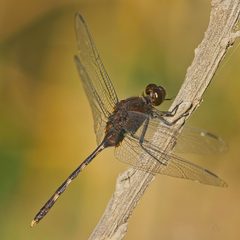
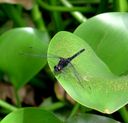
Erythemis plebeja, commonly known as the pin-tailed pondhawk, is a in the Libellulidae. It is widely distributed across the Caribbean, Central America, North America, and South America. The species is classified as Least Concern by the IUCN, with an increasing and no immediate threats to its survival.

Pronunciation
How to pronounce Erythemis plebeja: //ɛˈrɪθɛmɪs plɪˈbiːdʒə//
These audio files are automatically generated. While they are not always 100% accurate, they are a good starting point.
Identification
The specific epithet "plebeja" and "pin-tailed pondhawk" suggest a distinctive abdominal tip, though detailed morphological descriptions are not provided in the available sources. As a member of the Erythemis, it likely shares the robust body form and perching habits typical of pondhawks, but -level diagnostic features require examination.
Images
Distribution
Found in the Caribbean Sea, Central America, North America, and South America. GBIF records indicate presence in multiple Brazilian states (Amazonas, Bahia, Ceará, Espírito Santo, Maranhão, Minas Gerais, Mato Grosso, Pará, Pernambuco, Rio de Janeiro, Rio Grande do Sul, Santa Catarina, Sergipe, São Paulo) and Oaxaca, Mexico.
Human Relevance
The has been observed in agricultural settings, including lavender fields in California where it was noted in "predatory heaven" alongside other species.
Similar Taxa
- Erythemis simplicicollis (Eastern Pondhawk)Congeneric with similar pondhawk and ; both are robust perching in the same , requiring careful examination of abdominal patterning and terminal appendages for separation.
- Erythemis collocata (Western Pondhawk)Another congeneric pondhawk with overlapping distribution in North America; distinguished by subtle differences in coloration and abdominal structure.
More Details
Conservation Status
IUCN Red List status of Least Concern () reviewed in 2017, with trend assessed as increasing.