
Erythemis mithroides
(Brauer, 1900)
Claret Pondhawk
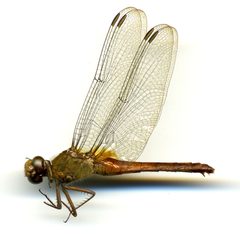
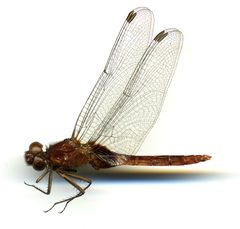
Erythemis mithroides, commonly known as the claret pondhawk, is a neotropical in the Libellulidae. It is a medium-sized, brightly colored with distinctive red coloration in males. The species occupies a wide geographic range across the Americas, from the southern United States through Central America and South America, and is frequently encountered in both natural and artificial lentic water bodies. It is an active with territorial males that exhibit aggressive during mate-finding and foraging activities.
Pronunciation
How to pronounce Erythemis mithroides: /ɛˈrɪθɛmɪs mɪˈθroʊɪdiːz/
These audio files are automatically generated. While they are not always 100% accurate, they are a good starting point.
Identification
Distinguished from by smaller body size and lower height compared to Erythemis haematogastra and E. plebeja. Males identified by uniform red and with red reflections, absence of thoracic stripes, and specific wing patterning with brown basal spot. Females recognized by combination of red abdomen with yellow or brown reflections, green-reflective brown thorax, and yellow pterostigma with brown costal border. Larvae identifiable by seven-segmented , specific mandibular formula, and characteristic leg including enlarged third pair and dark band on second .
Images
Habitat
Associated with lentic environments including swamps, marshes, mangroves, river backwaters, lakes, fish ponds, , and dams. Surrounding vegetation typically consists of secondary growth, degraded riparian forest, agricultural crops, grasses, or shrubs. Frequently found in anthropogenically modified areas. perch on grass stems and branches at or near water's edge.
Distribution
Occurs in southeast Texas and Mexico in North America; throughout Central America including the Antilles; and across South America except Chile. In Brazil, present in all biomes and river basins. Distribution records confirm presence in Middle America and South America broadly, with specific Colombian records from Antioquia, Atlántico, Bolívar, Boyacá, Chocó, Córdoba, and Magdalena departments.
Diet
are predatory on flying insects. Larvae are aquatic .
Life Cycle
Development includes aquatic larval stage and terrestrial stage. Larval described but specific developmental duration and number of instars not documented. and adult longevity details not specified.
Behavior
males are territorial, alternating between perching and flying. Males display continual heterospecific aggression during mate-finding and food-hunting activities. generally occurs lower than sympatric Erythemis . Adults active during daylight hours. Often observed in considerable numbers at suitable sites.
Ecological Role
Functions as an efficient of diverse insects in both and larval stages. Serves as prey for birds, fish, reptiles, amphibians, and other arthropods. Acts as a bioindicator for assessing freshwater quality and monitoring wetland conservation.
Human Relevance
Utilized as a bioindicator for freshwater health assessment. No documented direct economic importance or pest status. Occasionally observed in agricultural and artificial water bodies.
Similar Taxa
- Erythemis haematogastraLarger body size; E. mithroides flies lower and is smaller.
- Erythemis plebejaLarger body size; E. mithroides distinguished by smaller stature and lower height.
More Details
Taxonomic Note
Erythemis is not a due to extensive and structural variability in diagnostic characters. High intra- and interspecific variation in most characters, combined with shared character states with other , complicates phylogenetic resolution.