
Phanogomphus graslinellus
(Walsh, 1862)
Pronghorn Clubtail
Phanogomphus graslinellus, commonly known as the pronghorn clubtail, is a medium-sized in the Gomphidae. measure 47–54 mm in length and are active from early June through August, with regional variation extending from late May in some areas. The occupies lentic and slow lotic freshwater across a broad North American range spanning much of the United States and southern Canada. status is considered secure, with widespread and abundant occurrences.
Pronunciation
How to pronounce Phanogomphus graslinellus: //fəˈnɒɡəmfəs ˌɡræzlɪˈnɛləs//
These audio files are automatically generated. While they are not always 100% accurate, they are a good starting point.
Identification
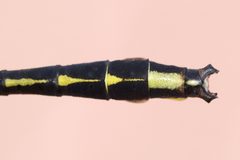
distinguished from similar clubtails by combination of: olive green and with dark brown stripes; abdominal pattern of greenish-yellow triangular marks on dark background; and swollen yellow-marked club at tip. Differs from plains clubtail (Gomphurus externus) by separated antehumeral and humeral stripes (largely in some plains clubtails) and male with lateral teeth (lacking in plains clubtail). Ozark clubtail (Gomphurus ozarkensis) has segment 9 black dorsally or with at most small pale yellow spot. Sulphur-tipped clubtail (Phanogomphus militaris) is paler overall, with yellow laterally on segment 7 and pale yellow on segment 9 narrowly separated dorsally and laterally.
Images
Habitat
Found near lakes, ponds, and slow streams of varying size. Nymphs exhibit selective microhabitat choice within water bodies, occurring only in specific stretches of particular streams, lakes, or ponds.
Distribution
North America: United States (Arkansas, Colorado, Iowa, Idaho, Illinois, Indiana, Kansas, Kentucky, Michigan, Minnesota, Missouri, Montana, Nebraska, North Dakota, Nevada, Ohio, Oklahoma, South Dakota, Texas, Washington, Wisconsin) and Canada (Alberta, British Columbia, Manitoba, Ontario, Saskatchewan).
Seasonality
season primarily early June through August; in Iowa specifically late May through August. rarely active in cool or cloudy conditions.
Diet
: soft-bodied flying insects including mosquitoes, flies, butterflies, , mayflies, flying ants, and . Nymphs: aquatic insects including mosquito larvae, aquatic fly larvae, larvae, and freshwater shrimp; occasionally small fish and tadpoles.
Life Cycle
Nymphs burrow into sand or mud with upturned abdominal tip exposed for respiration via water pumping. to stage occurs at water's edge just before sunrise.
Behavior
perch on rocks or twigs to hunt. Intolerant of cool temperatures; rarely observed flying on cool or cloudy days. After mating, females fly singly (without male attached) to oviposit by dipping tip into water while hovering over rivers, lakes, or slow streams.
Ecological Role
Nymphs function as in freshwater benthic , with selective occupancy potentially influencing local community structure. are aerial predators of flying insects.
Human Relevance
No significant direct interactions documented. Secure conservation status indicates no current management concerns.
Similar Taxa
- Gomphurus externus (Plains Clubtail)Similar appearance; distinguished by largely antehumeral and humeral stripes in some individuals, and male lacking lateral teeth.
- Gomphurus ozarkensis (Ozark Clubtail)Similar appearance; distinguished by segment 9 being black dorsally or with at most small pale yellow spot.
- Phanogomphus militaris (Sulphur-tipped Clubtail)Similar appearance; distinguished by paler overall coloration, yellow laterally on segment 7, and pale yellow on segment 9 narrowly separated dorsally and laterally.