
Cordulegaster dorsalis
Hagen, 1858
Pacific spiketail
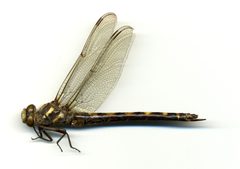
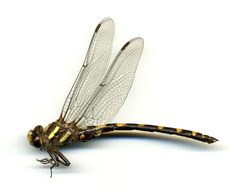
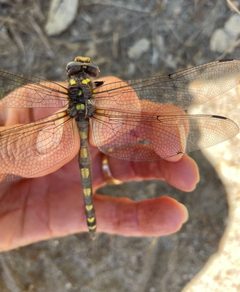
Cordulegaster dorsalis, commonly known as the Pacific spiketail, is a in the Cordulegastridae. Larvae inhabit intermittent headwater streams and typically require three years to reach maturity, emerging as during July and August. The species shows evidence of sediment microhabitat partitioning, with smaller larval instars associated with finer-grained organic sediments.
Pronunciation
How to pronounce Cordulegaster dorsalis: /ˌkɔːr.dʊ.ləˈɡæs.tər dɔːrˈsɑː.lɪs/
These audio files are automatically generated. While they are not always 100% accurate, they are a good starting point.
Identification
The Pacific spiketail can be distinguished from other Cordulegaster by its geographic range in western North America. Members of the Cordulegaster are characterized by prominent spikelike ovipositors in females, from which the 'spiketail' is derived. Specific diagnostic features for C. dorsalis relative to such as C. diadema (Apache spiketail) and C. boltonii (golden-ringed ) are not documented in available sources.
Images
Habitat
Intermittent headwater streams in forested regions. Larval instars show non-random distribution across sediment microhabitats, with smaller individuals associated with smaller-grained organic sediments.
Distribution
Western North America, specifically southwestern British Columbia and adjacent regions. The occurs in Pacific coastal drainages.
Seasonality
occurs throughout July and August. Larval development spans multiple years, with most individuals requiring three years to reach maturity.
Life Cycle
Larvae normally take three years to reach maturity. Limited evidence suggests split cohort development, with some individuals potentially emerging after two years. emerge during July and August. Specific details regarding deposition, oviposition substrate, or adult longevity are not documented in available sources.
Behavior
Larval instars exhibit sediment microhabitat association, with smaller animals occupying smaller-grained organic sediments. This pattern suggests size-dependent partitioning, though variation exists between streams.
Ecological Role
As a predatory , larvae function as within headwater stream . The contributes to trophic dynamics in intermittent stream where it occurs.
Similar Taxa
- Cordulegaster diademaApache spiketail, occurring in southwestern United States to Mexico and Rica; distinguished by geographic range and potentially by thoracic patterning
- Cordulegaster boltoniiGolden-ringed , a Palearctic not occurring in North America; distinguished by geographic distribution
Sources and further reading
- BugGuide
- Wikipedia
- GBIF taxonomy match
- NCBI Taxonomy
- Catalogue of Life
- A Dragonfly to Behold: Within an Arm's Reach | Bug Squad
- Scorched locust, courtesy of the Locust leafminer, Odontota dorsalis — Bug of the Week
- Scorched locust - Locust leafminer, Odontota dorsalis — Bug of the Week
- Discovery of wasp species previously unknown in the U.S.
- Early Detection, Collaboration Key to Invasive Fruit Fly Eradication in Florida
- Fantastic dragonflies and how to help them - Buglife Blog - Buglife
- Life History Phenology and Sediment Size Association of the Dragonfly <em>Cordulegaster dorsalis</em> (Odonata: Cordulegastridae) in an Ephemeral Habitat in Southwestern British Columbia