
Rhionaeschna californica
(Calvert, 1895)
California Darner
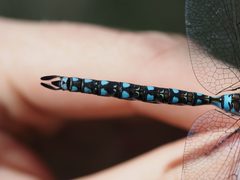
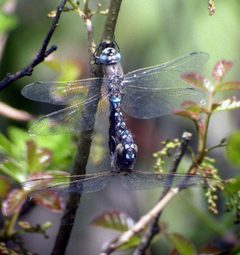
Rhionaeschna californica, the California darner, is a medium-sized in the Aeshnidae. are distinguished by bright blue diagonal spots on the and exhibit in coloration and color. The occupies aquatic across western North America and Central America, with larvae requiring several years of aquatic development before as adults.
Pronunciation
How to pronounce Rhionaeschna californica: //riˌoʊ.nəˈɛsk.nə ˌkæl.əˈfɔr.nɪ.kə//
These audio files are automatically generated. While they are not always 100% accurate, they are a good starting point.
Identification
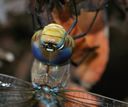
Best distinguished from similar darners by the distinct bright blue diagonal spots on the . Males identified by blue and blue/green thoracic stripes; females by light brown eyes and variable thoracic coloration (blue or greenish-yellow).
Images
Habitat
Occupies lakes, ponds, marshes, and stream pools with edge vegetation. Frequently found in with alkaline water conditions. Occurs at lower elevations in Mediterranean climate regions with wet winters and dry summers.
Distribution
Western United States (highest concentration from Baja California to southern Mexico), southwestern Canada (including Vancouver), and Central America.
Seasonality
season from mid-April to late June in most of range; in California, from February to August. One of the earliest to appear in spring.
Diet
Larvae prey on aquatic (insect larvae, freshwater shrimp), small fish, and tadpoles. capture soft-bodied flying insects including mosquitoes, flies, and butterflies.
Life Cycle
Larvae (naiads) require several years of aquatic development before transforming into . from naiad to adult occurs at night, believed to be an to avoid . Females deposit on vegetation at water level, including vertical stems and floating leaves.
Behavior
Males patrol shorelines just above open water adjacent to riparian zones to locate females. Mating occurs primarily at night, often initiated from perches near trees. Copulation lasts 5–20 minutes.
Ecological Role
function as aerial of soft-bodied insects. Larvae are aquatic predators that regulate of aquatic , small fish, and tadpoles. Serves as prey for birds, frogs, and fish.
Human Relevance
Contributes to of pest insects including mosquitoes. Subject of ecological and phenological study due to early spring pattern. IUCN status: Least Concern (), stable, last assessed 2017.
Similar Taxa
- Other Rhionaeschna speciesMay share general darner but lack the distinct bright blue diagonal abdominal spots diagnostic of R. californica
- Aeshna speciesSimilar size and use; distinguished by abdominal spot pattern and thoracic stripe configuration
More Details
Nocturnal emergence
The from naiad to occurs at night, an apparent anti- .
Alkaline water tolerance
Unusually tolerant of alkaline conditions compared to many odonate , expanding available .
Sources and further reading
- BugGuide
- Wikipedia
- GBIF taxonomy match
- iNaturalist taxon
- NCBI Taxonomy
- Catalogue of Life
- The Big 43: The California Native Plants, Plus One, Studied in UC Davis Research | Bug Squad
- Bohart Museum: Learn about California's State Insect on UC Davis Picnic Day | Bug Squad
- A Mural Like No Other | Bug Squad
- A Flash of Orange: Welcome, California Tortoiseshell! | Bug Squad
- California Dogface Butterfly: What the Fire Did | Bug Squad
- Bembicid Holdings | Entomology Research Museum