
Gomphaeschna
Selys, 1871
Pygmy Darners
Species Guides
2- Gomphaeschna antilope(Taper-tailed Darner)
- Gomphaeschna furcillata(Harlequin Darner)
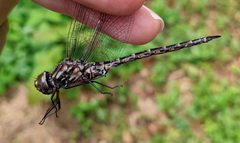
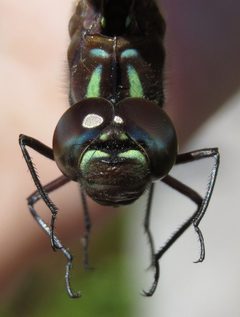
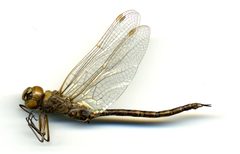
Gomphaeschna is a of small commonly called pygmy darners, currently comprising two extant native to eastern North America. It represents one of the most ancient surviving dragonfly genera known, with fossil records extending to the earliest Cretaceous (Berriasian) of Russia. The genus formerly had a much broader distribution across Eurasia and western North America, with multiple fossil species documented from the Paleocene through Miocene. Some taxonomic authorities recognize it as the sole genus of the distinct Gomphaeschnidae due to its deep evolutionary origins.
Pronunciation
How to pronounce Gomphaeschna: //ɡɒmfæˈɛsknə//
These audio files are automatically generated. While they are not always 100% accurate, they are a good starting point.
Identification
Small-bodied darners (Aeshnidae) with two extant distinguished by abdominal patterning: G. antilope (taper-tailed darner) has a tapered , while G. furcillata (harlequin darner) displays more contrasting coloration. Both species are noticeably smaller than most other North American darner .
Images
Habitat
Forested wetlands, swamps, and slow-moving streams in eastern North America; associated with shaded, vegetated aquatic environments.
Distribution
Extant restricted to eastern North America. Formerly widespread across Eurasia and western North America based on extensive fossil record from Russia, Mongolia, Czech Republic, Austria, Denmark, and North Dakota.
Similar Taxa
- BoyeriaAnother small darner in eastern North America; Boyeria have different wing venation and abdominal shape.
- NasiaeschnaSmall darner with overlapping range; Nasiaeschna pentacantha has distinctive pentagonal spots on the not seen in Gomphaeschna.