
Epiaeschna
Hagen, 1883
Swamp darner
Species Guides
1- Epiaeschna heros(Swamp Darner)
Pronunciation
How to pronounce Epiaeschna: /ˌɛpiəsˈna/
These audio files are automatically generated. While they are not always 100% accurate, they are a good starting point.
Identification
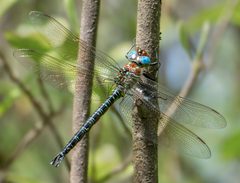
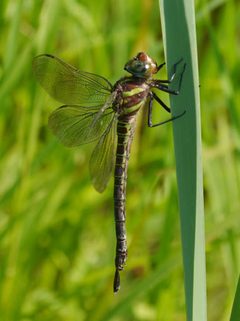
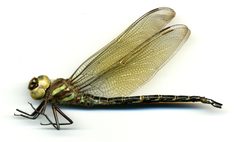
The single living E. heros is a large darner with green that meet at the top of the . It has a brown with two green lateral stripes and a brown marked with blue or green spots. The wings are clear with a slight amber tint at the base. Separation from other Aeshnidae requires examination of abdominal appendages and wing venation details.
Images
Habitat
Associated with wooded swamps, marshes, and slow-moving streams with abundant vegetation. Breeding sites typically feature standing or slow-flowing water with submerged and emergent plants.
Distribution
Extant: eastern North America. Fossil record: England, Kazakhstan, France, Crimea, China, and Germany (Eocene to Miocene).
Seasonality
active from late spring through summer; peak activity varies by latitude within eastern North America.
Life Cycle
Aquatic larval stage (naiad) develops in standing or slow-moving water. are aerial . Specific developmental duration not documented.
Ecological Role
function as aerial of flying insects. Larvae are aquatic predators within wetland .
Human Relevance
Occasionally encountered by naturalists and enthusiasts in eastern North American wetlands. No significant economic or medical importance.
Similar Taxa
More Details
Fossil record
The six described fossil represent one of the more complete fossil histories among odonate , spanning from the Middle Eocene to Miocene across Eurasia. This distribution pattern suggests significant range contraction or extinction events during the Cenozoic.