
Aeshna canadensis
Walker, 1908
Canada Darner
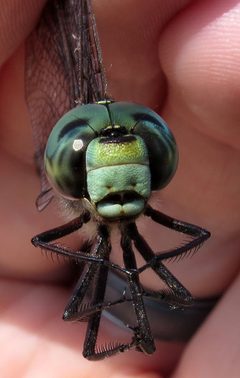
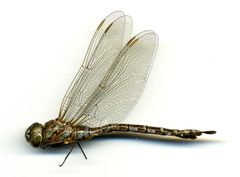
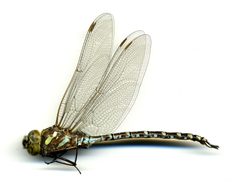
Aeshna canadensis, the Canada darner, is a large in the Aeshnidae. First described by Edmund Murton Walker in 1908, it is common throughout southern Canada and the northern United States. are active from June to October. The species has been documented undertaking north-south migratory movements within its range, representing the first conclusive evidence of in the Aeshna in North America.
Pronunciation
How to pronounce Aeshna canadensis: /ˈiːʃnə kæˈnædənˌsɪs/
These audio files are automatically generated. While they are not always 100% accurate, they are a good starting point.
Identification
Distinguished from the very similar green-striped darner (Aeshna verticalis) by minor differences in the shape of the thoracic markings; green-striped darner typically has green stripes. Separated from the larger lake darner (Aeshna eremita) by the latter's distinct dark stripe across the . The notched front thoracic stripe with extension at the top is a key diagnostic feature for A. canadensis.
Images
Appearance
are relatively large, slender , 64–73 mm in total length. Predominantly dark brown with paler blue or green markings. has two vertical stripes on each side; the front stripe has a prominent notch with an extension at the top. has spots on most segments. Pale markings are usually blue in males and range from yellow-green to blue in females. are bluish in males and yellowish or bluish in females. Pale markings may turn gray at colder temperatures.
Habitat
Larval includes lakes and ponds, particularly bog ponds and beaver ponds with abundant emergent vegetation. Breeding ponds typically have acidic conditions; one Ontario study found the restricted to ponds with pH ≤ 6.2. foraging habitats include clearings and roadways where feeding swarms form in early evening.
Distribution
Found from Newfoundland and New Jersey in the east to Yukon in the west. Range extends south down the Appalachian Mountains to West Virginia and through mountain ranges to California and Montana. Isolated in Nebraska. Core range spans southern Canada and northern United States.
Seasonality
observed from June to October. occurs May–June in central Minnesota, with mature adults flying and ovipositing in late summer following a 10–15 week maturation period.
Life Cycle
Aquatic nymph stage occupies most of the life span. Larvae found in lakes and ponds, especially bog ponds and beaver ponds. Larvae may spend one or two winters underwater before emerging. occurs May–June. undergo 10–15 week maturation period before reproductive activity.
Behavior
Mating occurs in shrubs near breeding ponds. Females lay at water level, usually in marshy vegetation away from shore. Breeding most active in sunny weather. Adult males fly slowly along pond shores, sometimes dropping to the surface to search for females. Away from breeding sites, adults form feeding swarms with other darner in early evening. Some undertake north-south migratory movements; late-flying mature adults in Minnesota have been traced to origins in southern Manitoba and more northerly regions.
Ecological Role
Predatory ; larvae feed on small aquatic . are aerial . is considered common to abundant where found.
Similar Taxa
- Aeshna verticalisGreen-striped darner; very similar but distinguished by minor differences in thoracic marking shape and typically green stripes
- Aeshna eremitaLake darner; larger size and distinct dark stripe across the
More Details
Migration Evidence
Stable hydrogen isotope analysis of wing tissue (δ2Hw) combined with phenological observations provides conclusive evidence of north-south . Late-flying mature in Minnesota originated from southern Manitoba; adults collected in northern Minnesota and south-central Canada originated from central Canada (Manitoba/Quebec) or northeastern range areas.
Acid Sensitivity
Ontario study documented restriction to breeding ponds with pH ≤ 6.2, indicating sensitivity to water chemistry and potential vulnerability to acidification.
Sources and further reading
- BugGuide
- Wikipedia
- GBIF taxonomy match
- iNaturalist taxon
- NCBI Taxonomy
- Catalogue of Life
- Bug Eric: Spider Sunday: Red Velvet Jumper
- Beauties in the Bog - Buglife Blog - Buglife
- Bug Eric: True Bug Tuesday: Mirid plant bug
- Bug Eric: New Mexico Dragonfly Blitz - Day 2
- Lythraceae | Beetles In The Bush
- Don't get bogged down with peat... - Buglife Blog - Buglife
- Phenological and isotopic evidence for migration as a life history strategy in Aeshna canadensis (family: Aeshnidae) dragonflies