
Mexoleon papago
(Currie, 1899)
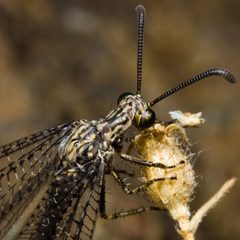
Mexoleon papago is a of antlion in the Myrmeleontidae, originally described by Currie in 1899 under the basionym Brachynemurus papago. It is distributed across Central America and North America. Antlions in this family are predatory insects, with larvae known for constructing pit traps to capture prey.
Pronunciation
How to pronounce Mexoleon papago: /mɛkˈsoʊliːən ˈpæpəˌɡoʊ/
These audio files are automatically generated. While they are not always 100% accurate, they are a good starting point.
Identification
As a member of the Mexoleon, this can be distinguished from related antlions by characteristics of the genus, though specific diagnostic features for M. papago are not documented in available sources. possess the typical neuropteran features of large, transparent wings with dense venation and elongated bodies. The specific epithet "papago" refers to the Tohono O'odham (Papago) people of the southwestern United States and northwestern Mexico, suggesting a type locality or regional association.
Images
Distribution
Recorded from Middle America and North America. The specific epithet suggests association with the southwestern United States and northwestern Mexico, corresponding to the traditional territory of the Tohono O'odham people.
Ecological Role
As with other antlions, larvae likely function as sit-and-wait in sandy or loose soil , contributing to .
Similar Taxa
- Other Mexoleon speciesCongeneric share the same -level characteristics requiring detailed examination for separation.
- Brachynemurus speciesFormerly classified under this ; shares historical taxonomic placement and may exhibit morphological similarities.
More Details
Taxonomic history
Originally described as Brachynemurus papago by Currie in 1899, later transferred to the Mexoleon. The basionym reflects early classification within a different genus grouping.