
Dendroleon obsoletus
(Say, 1839)
Eastern Spotted-winged Antlion, Spotted-winged Antlion
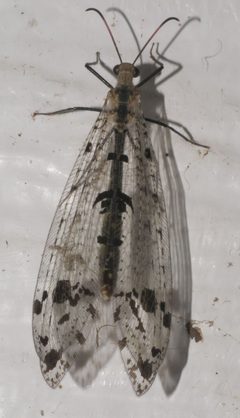
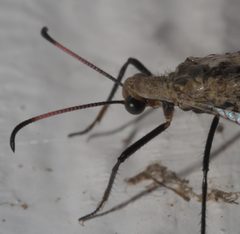
Dendroleon obsoletus, commonly known as the Eastern Spotted-winged Antlion, is a of antlion in the Myrmeleontidae. are distinguished by spotted wing patterns. The species occurs across North America, with larvae inhabiting sandy soils beneath rock ledges and other sheltered areas where they construct pit traps to capture prey.
Pronunciation
How to pronounce Dendroleon obsoletus: /dɛnˈdroʊliən ˌɒbsəˈliːtəs/
These audio files are automatically generated. While they are not always 100% accurate, they are a good starting point.
Identification
are recognized by spotted or patterned wings, distinguishing them from other antlion with plainer wings. The specific pattern of spots on the wings provides the basis for the . Larvae, like other antlions, possess sickle-shaped and construct conical pits in loose soil.
Images
Habitat
Sandy soils beneath sandstone ledges and other sheltered ground surfaces. The has been observed in box canyons with moist sandstone exposures and in prairie natural areas with suitable soil conditions for larval pit construction.
Distribution
North America. Specific records include the eastern and central United States, with observations from Missouri, Arkansas, Oklahoma, and Vermont.
Diet
Larvae are predatory, capturing ants and other small insects that fall into their pit traps. feeding habits are not well documented.
Life Cycle
Complete with , larva, pupa, and stages. Larvae are the familiar "doodlebugs" that construct conical pits in sandy soil and lie buried at the bottom with only their exposed. occurs in a silken cocoon.
Behavior
Larvae construct pit traps in sandy soil beneath sheltered ledges. When prey falls into the pit, the larva uses its sickle-shaped to seize and subdue the victim. Larvae are sedentary, remaining buried at the bottom of their pits. are active fliers.
Ecological Role
Larvae function as sit-and-wait in sandy soil , contributing to control of ants and other small ground-dwelling insects.
Human Relevance
Larvae are familiar to naturalists and children as "doodlebugs," often demonstrated by disturbing the pit to reveal the buried . The has no known economic importance.
Similar Taxa
- Other Dendroleon speciesSimilar ; distinguished by specific wing spot patterns and geographic distribution
- Other Myrmeleontidae larvaeLarval pits appear similar; identification requires examination of specimens or larval structure