
Microminae
Genus Guides
1- Micromus(brown lacewings)
Microminae is a of brown lacewings ( Hemerobiidae) containing four with distinct geographic distributions: the globally distributed Micromus, Neotropical Nusalala, New Caledonian Noius, and Australian-New Guinean Megalomina. The subfamily is defined by a single unambiguous synapomorphy: male abdominal tergites 9 and 10. Molecular dating places the divergence of Microminae from its sister subfamily Drepanepteryginae in the Early Cretaceous, approximately 131–141 million years ago, with crown-group Microminae originating 112–118 million years ago.
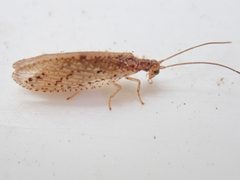
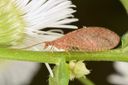
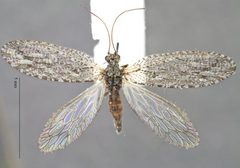
Pronunciation
How to pronounce Microminae: /ˌmaɪ.kroʊˈmaɪˌni/
These audio files are automatically generated. While they are not always 100% accurate, they are a good starting point.
Identification
Microminae can be distinguished from other Hemerobiidae by the fusion of male abdominal tergites 9 and 10, a synapomorphic character state unique to this group. Additional homoplasious (characters 23:1 and 37:1) support subfamily placement but are not exclusive to Microminae. External morphological characters for field identification to subfamily level are not well documented in available sources.
Images
Distribution
The has a composite distribution reflecting its constituent : Micromus is globally distributed; Nusalala is restricted to the Neotropics; Noius is to New Caledonia; and Megalomina occurs in Australia and New Guinea.
Similar Taxa
- DrepanepteryginaeSister of Microminae, distinguished by non- male abdominal tergites 9 and 10 and estimated divergence 131–141 million years ago.
- Other Hemerobiidae subfamiliesLack the male tergites 9–10 synapomorphy that defines Microminae.
More Details
Phylogenetic relationships
Recent phylogenetic studies place Drepanepteryginae as the sister of Microminae. The last common ancestor of crown-group Microminae is estimated to have lived between 112 and 118 million years ago.