
Meinertellidae
Verhoeff, 1910
rock bristletails
Genus Guides
3- Hypomachilodes
- Machilinus(rock bristletails)
- Machiloides
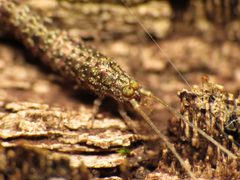
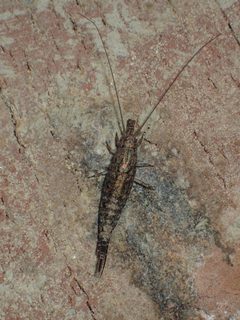
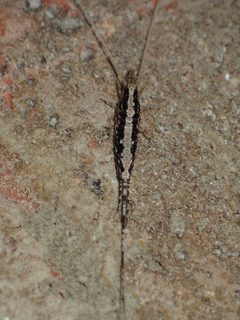
is a of basal insects in the order , commonly known as rock . The family comprises more than 170 across 19 , grouped into five distinct genus groups. Members are distinguished from the related family Machilidae by specific morphological traits including the absence of at the base of appendages and the presence of small abdominal sternites protruding between coxal plates. While most Archaeognatha are rock-dwelling, some Meinertellidae species in the Amazon have adapted to arboreal and leaf litter .
Pronunciation
How to pronounce Meinertellidae: //maɪˌnɜːrˈtɛlɪˌdaɪ//
These audio files are automatically generated. While they are not always 100% accurate, they are a good starting point.
Identification
Distinguished from Machilidae by: (1) lack of at the base of legs, , , and palps; (2) small abdominal sternites that protrude slightly between the coxal plates; and (3) patches of reddish to violet-brown hypodermal pigment on the appendages. These features are diagnostic at the level within .
Images
Habitat
Primarily petrophilous (rock-loving), inhabiting rain forests, regular forests, and coastal cliffs. Amazonian have been observed in leaf litter on the forest floor, on tree trunks, and in the .
Distribution
Principally distributed in the southern hemisphere, including rain forests, forests, and coastal cliff environments. First recorded in China from Medog, Tibet, representing the northernmost occurrence of the Machilontus.
Similar Taxa
- MachilidaeOther in order ; distinguished by presence of at leg and bases, absence of protruding abdominal sternites between coxal plates, and lack of distinctive reddish-violet hypodermal pigment patches on appendages
Sources and further reading
- BugGuide
- Wikipedia
- GBIF taxonomy match
- iNaturalist taxon
- NCBI Taxonomy
- Catalogue of Life
- Machilontus (s. str.) medogensis Song & Huang, sp. nov. from Tibet, the northernmost record of the genus Machilontus Silvestri, 1912 and the first record of the family Meinertellidae (Insecta: Microcoryphia: Machiloidea) in China