
Machiloides
Silvestri, 1904
Species Guides
1- Machiloides banksi(rock bristletail)
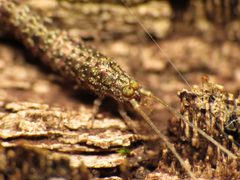
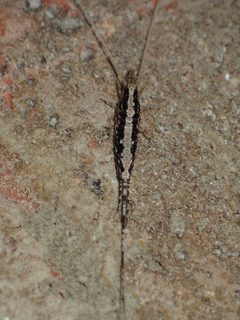
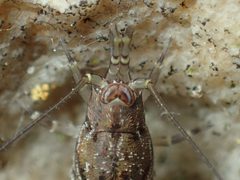
Machiloides is a of rock bristletails (order ) in the Meinertellidae. The genus was established by Silvestri in 1904 and contains at least two described : M. banksi (1911) and M. petauristes (1980). Rock bristletails are primitive wingless insects characterized by their elongated bodies and three caudal filaments. Members of this genus inhabit rocky microhabitats and are part of the understudied fauna of basal insect lineages.
Pronunciation
How to pronounce Machiloides: //mæˈkɪloʊ.aɪdiːz//
These audio files are automatically generated. While they are not always 100% accurate, they are a good starting point.
Identification
Machiloides can be distinguished from other Meinertellidae by genitalic characters, particularly the structure of the male claspers and female subgenital plate. The is separated from the related genus Meinertellus by subtle differences in abdominal appendage and chaetotaxy patterns. Definitive identification requires examination of these microscopic features; external morphology alone is insufficient for species-level determination within the genus.
Images
Habitat
Rocky including stone walls, talus slopes, and boulder fields. Inhabits crevices and spaces beneath stones where humidity is retained. Associated with mesic to xeric rocky environments in Mediterranean and temperate regions.
Distribution
Recorded from Europe and western Asia. Machiloides banksi occurs in Italy and surrounding regions. Machiloides petauristes has been reported from Greece. Distribution data remain sparse due to limited collecting effort and cryptic habits.
Life Cycle
Development is ametabolous (without ), with young resembling smaller versions of . Juveniles undergo multiple throughout life, continuing to molt as adults—a rare trait among insects. Specific details of deposition and nymphal development in Machiloides are not documented.
Behavior
foragers that emerge from rocky refugia after dusk. Capable of rapid jumping escape responses using the flexion of the against the substrate. Maintains contact with substrate surfaces using adhesive vesicles on abdominal appendages.
Ecological Role
Decomposer contributing to nutrient cycling in rocky microhabitats. Consumes detritus, , and lichens growing on stone surfaces. Serves as prey for small in cryptic ground-layer .
Human Relevance
No direct economic or medical significance. Occasionally encountered by entomologists and naturalists examining rocky . Presence indicates intact rocky microhabitats with stable humidity conditions.
Similar Taxa
- MeinertellusConvergent external and shared Meinertellidae; distinguished by male genitalic and abdominal appendage characters
- MachilisSimilar 'rock ' and general body plan; belongs to Machilidae rather than Meinertellidae, with differences in pretarsal structure and abdominal sternite
More Details
Taxonomic history
Machiloides was originally described by Silvestri in 1904. The was long confused with Meinertellus, and modern concepts rely heavily on male genitalic established by Wygodzinsky and Schmidt's 1980 revision.
Conservation status
Not evaluated by IUCN. specificity to rocky environments may make vulnerable to quarrying, urbanization of stone wall habitats, and climate change effects on microhabitat humidity.