
Nigronia serricornis
(Say, 1824)
Serrate Dark Fishfly, Saw-combed Fishfly, Hellgrammite
Nigronia serricornis is a large aquatic insect in the Corydalidae, commonly known as the serrate dark or saw-combed fishfly. The aquatic larvae, often called hellgrammites, are sit-and-wait ambush and frequently the largest insect predators in small woodland streams. are short-lived, weak fliers that do not disperse far from their sites. The has a broad distribution across eastern North America with documented genetic structure shaped by the Appalachian Mountains.
Pronunciation
How to pronounce Nigronia serricornis: //nɪˈɡroʊ.niə ˌsɛr.ɪˈkɔr.nɪs//
These audio files are automatically generated. While they are not always 100% accurate, they are a good starting point.
Identification
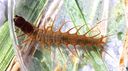
Larvae are distinguished from similar aquatic by the combination of: paired lateral appendages on abdominal segments 1-8 (functioning as gills), two strong hooks on anal , and serrate . Differentiated from the related Corydalus cornutus (hellgrammite) by smaller maximum size and lack of elongated mandibles in males. Distinguished from congeneric N. fasciatus by subtle morphological differences and overlapping range; precise field identification between the two requires close examination. recognized by serrate and dark coloration.
Images
Habitat
Larvae inhabit cool, flowing water of woodland streams, particularly 2nd and 3rd order streams with rocky or woody substrates. They occupy spaces beneath stones, in leaf packs, and within submerged wood where they can anchor in moderate to strong currents. are terrestrial but remain near riparian zones close to their aquatic sites.
Distribution
Eastern North America, ranging from Florida northward to Ontario, Canada, and westward to the Rocky Mountains. Documented genetic analyses reveal six major clades with the ancestral clade in the northern range and derived clades separated by the Appalachian Mountains. Distribution in Michigan confirmed; present throughout Vermont and broader eastern United States.
Seasonality
Larvae present year-round in streams with stable respiratory physiology across seasons. emerge and are active for approximately one week, with timing varying across the broad geographic range. Specific adult periods not documented in sources but likely summer months in temperate regions.
Diet
Active consuming a variety of smaller aquatic including larvae (Simulium, Chironomidae), caddisfly larvae (Cheumatopsyche, Hydropsyche), nymphs, black fly larvae, ostracods, and small crustaceans. Diet composition varies seasonally and monthly. has been observed. Larvae are the only feeding life stage; do not feed.
Host Associations
- Nanocladius (Nanocladius) rectinervis - phoretic larvae attach to of N. serricornis larvae, living in silken tubes and feeding on detrital material caught in body folds. Provides midge with mobility, stability, and protection in strong currents. Host specificity to N. serricornis documented.
Life Cycle
Holometabolous development with four stages: , larva, pupa, and . Eggs deposited in masses on overhanging vegetation or structures above water; larvae drop into water upon hatching. Larval stage lasts up to three years, the sole feeding stage. occurs in shallow chambers excavated in rotting logs or soil near shore for up to three weeks. Adult requires approximately one hour for wing drying before . Adult lifespan approximately one week, dedicated to mating and oviposition.
Behavior
Larvae are sit-and-wait ambush that forage with open, rapidly closing them upon prey contact. They maintain position in currents using anal hooks and are capable of moving between microhabitats. are poor fliers with limited , remaining near sites. Females select unoccupied oviposition sites on structures overhanging water, showing no preference beyond avoidance of occupied masses.
Ecological Role
Top in small woodland stream , regulating of other aquatic insects. Serves as prey for fish and other aquatic predators. Provides phoretic and food resources for specialized associates such as Nanocladius rectinervis. Contributes to nutrient cycling through and processing of invertebrate prey.
Human Relevance
Larvae used as fishing , known as hellgrammites. Presence indicates relatively healthy, cool, flowing water conditions. No documented economic pest status or medical importance.
Similar Taxa
- Nigronia fasciatusCongeneric with overlapping range and similar ; requires close examination for reliable differentiation.
- Corydalus cornutusLarger megalopteran with similar larval ; distinguished by greater maximum size and sexually dimorphic elongated in males. Dominates in competitive interactions where ranges overlap.
More Details
Physiological Adaptation
Larvae maintain stable oxygen consumption regardless of temperature, season, or developmental stage—an unusual physiological trait among aquatic insects that allows metabolic rate to vary directly with ambient water temperature.
Genetic Structure
Six major clades identified across the range, with ancestral northern and derived southern populations separated by the Appalachian Mountains, indicating historical biogeographic influence on population structure.
Sources and further reading
- BugGuide
- Wikipedia
- GBIF taxonomy match
- iNaturalist taxon
- NCBI Taxonomy
- Catalogue of Life
- The phoretic association of Nanocladius (Nanocladius) rectinervis (Kieffer) (Diptera: Chironomidae) on Nigronia serricornis Say (Megaloptera: Corydalidae)
- The Distribution of <i>Corydalus Cornutus</i> (Linnaeus) and <i>Nigronia Serricornis (Say) (Megaloptera: Corydalidae) in Michigan