Nigronia fasciata
(Walker, 1853)
Banded Dark Fishfly
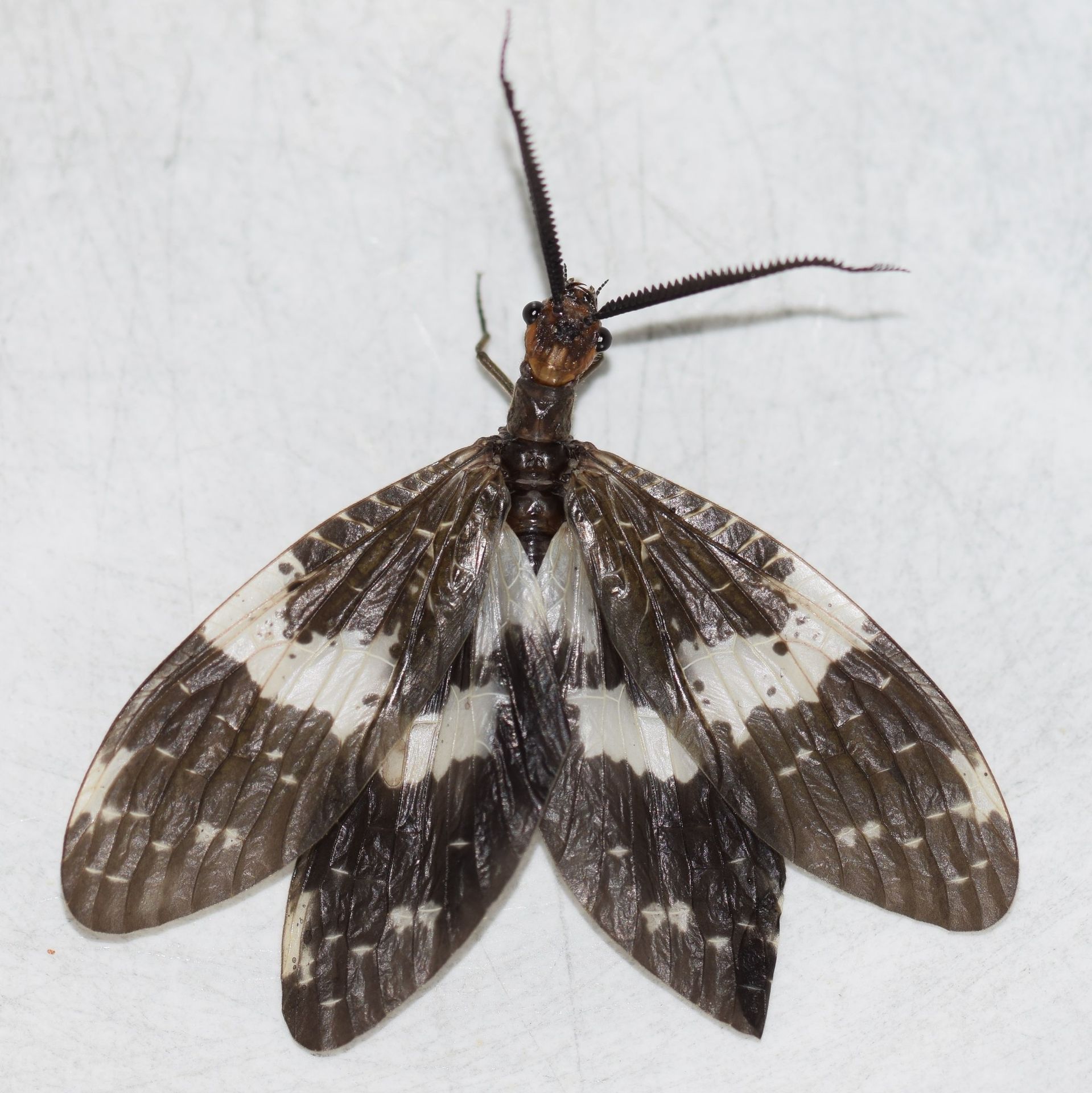
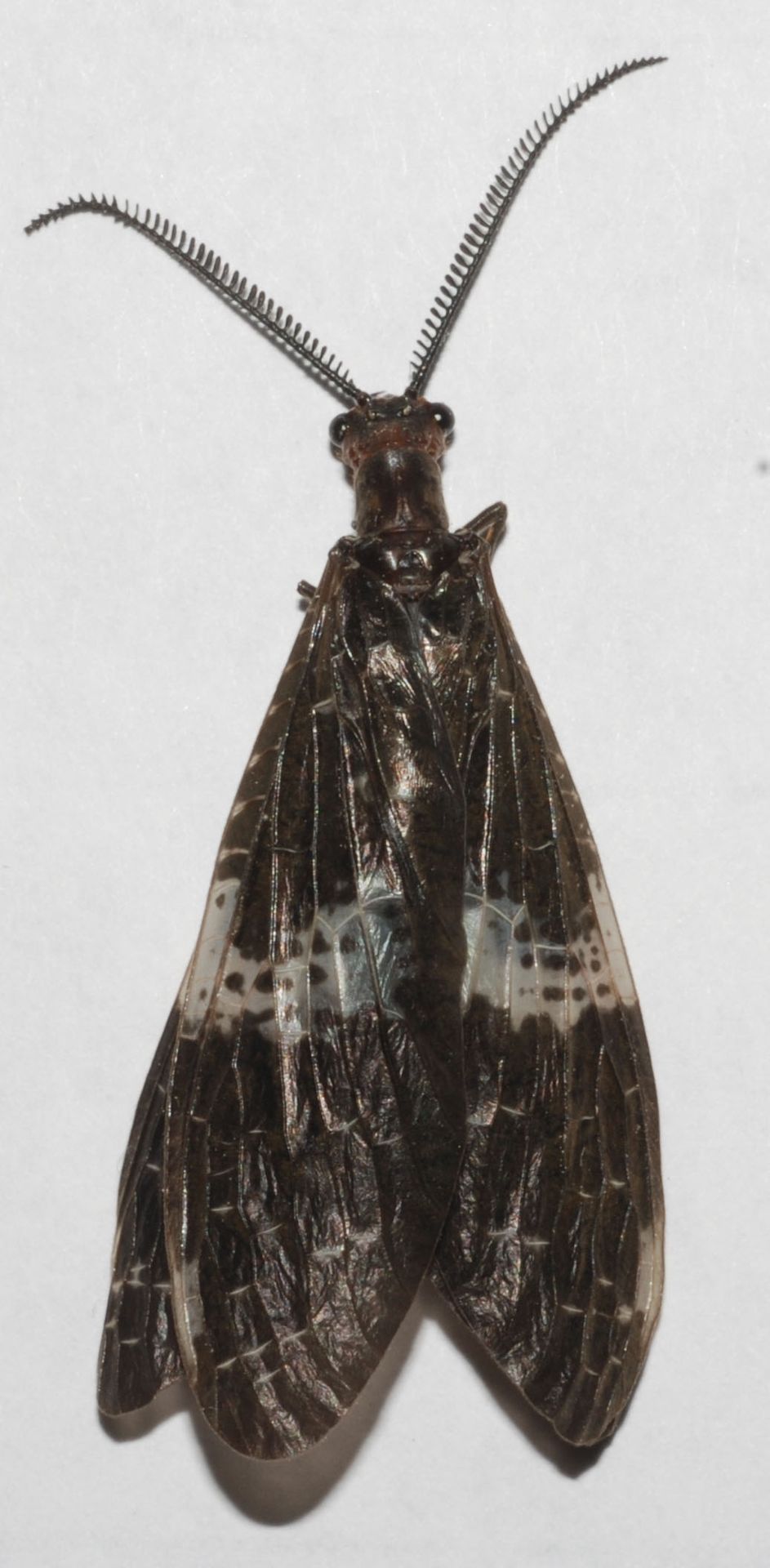
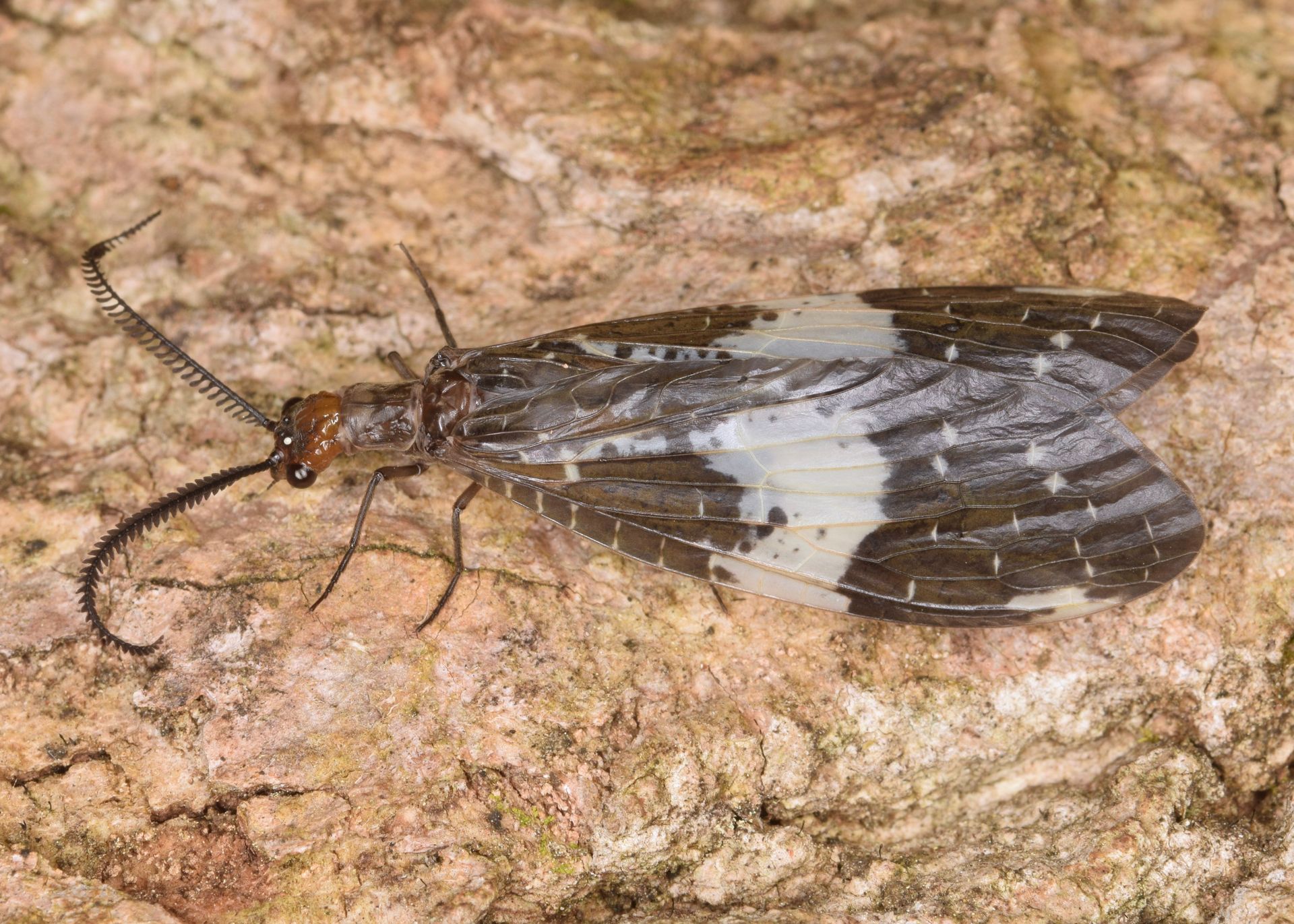
Nigronia fasciata is a of dark in the Corydalidae, order Megaloptera. measure 22–28 mm in body length. The species occurs in the eastern United States and is not present in Canada. Like other fishflies, it has aquatic larval stages and terrestrial adults.
Pronunciation
How to pronounce Nigronia fasciata: //nɪˈɡroʊ.niə ˌfæ.siˈeɪ.tə//
These audio files are automatically generated. While they are not always 100% accurate, they are a good starting point.
Identification
Nigronia fasciata can be distinguished from other eastern North American fishflies by its relatively small size (22–28 mm) and dark, banded appearance. It is smaller than most dobsonflies (Corydalus) and can be separated from the related spring fishfly Chauliodes by its darker coloration and . The genus Nigronia is distinguished from Chauliodes by activity period and larval preferences.
Images
Appearance
measure 22–28 mm (2.2–2.8 cm) in body length. As a dark in the Nigronia, adults likely exhibit the characteristic dark coloration typical of the group, with banded or fasciated patterning suggested by the epithet.
Habitat
Aquatic and riparian . Larvae develop in clean, flowing freshwater streams and rivers. are found near water bodies in wooded or forested areas.
Distribution
Eastern United States. Not present in Canada.
Seasonality
are active in summer. This distinguishes Nigronia from the related Chauliodes (spring fishflies), which are active in spring.
Life Cycle
Aquatic larval development in freshwater streams and rivers, with terrestrial stage. Specific details on deposition, larval duration, and are not documented in available sources.
Ecological Role
Larvae are aquatic in freshwater . may serve as food for terrestrial predators.
Similar Taxa
- Chauliodes spp.Spring fishflies in the related Chauliodes are similar in general appearance but are active in spring rather than summer and typically have lighter coloration.
- Corydalus cornutusThe eastern dobsonfly is much larger (up to 75 mm) and has distinctive elongated in males.
More Details
Taxonomic note
The was described by Walker in 1853. The Nigronia represents dark fishflies, distinguished from spring fishflies (Chauliodes) by their summer activity period.
Sources and further reading
- BugGuide
- Wikipedia
- GBIF taxonomy match
- iNaturalist taxon
- Catalogue of Life
- Halloween ID challenge answer – Argiope trifasciata | Beetles In The Bush
- Buprestidae | Beetles In The Bush | Page 6
- Meet the Crevice Weaver: A Newly Discovered Urban Spider from Colombia | Blog
- Year of the Horse 2026: A selection of equine-related species to celebrate the Lunar New Year | Blog
- Bug Eric: Spider Sunday: Banded Argiope