
Dysmicohermes
Munroe, 1953
Species Guides
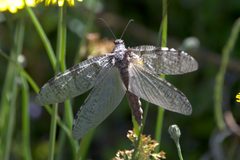
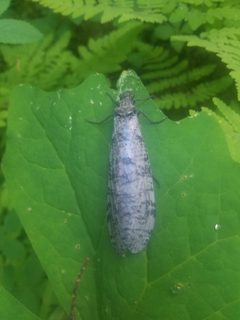
2Dysmicohermes is a of fishflies in the Corydalidae, established by Munroe in 1953. The genus contains two described : Dysmicohermes disjunctus and Dysmicohermes ingens. As members of Megaloptera, these insects represent a relatively small and ancient order of holometabolous insects. The genus is part of the diverse Corydalidae family, which includes some of the largest aquatic insects in North America.
Pronunciation
How to pronounce Dysmicohermes: //ˌdɪs.mɪˈkoʊ.hɜr.miːz//
These audio files are automatically generated. While they are not always 100% accurate, they are a good starting point.
Identification
Identification to level requires examination of genitalia and wing venation patterns characteristic of Corydalidae. Dysmicohermes can be distinguished from other corydalid genera by specific morphological features of the male tenth tergite and associated structures, though precise diagnostic characters require taxonomic knowledge. The two species, D. disjunctus and D. ingens, differ in size and geographic distribution.
Images
Habitat
Aquatic larval stages inhabit flowing freshwater environments including streams and rivers. are typically found in riparian zones near larval . Specific microhabitat preferences for larvae have not been extensively documented for this .
Distribution
North America. Dysmicohermes disjunctus occurs in eastern North America, while Dysmicohermes ingens is known from western North America.
Seasonality
are active during warmer months, with periods generally occurring in late spring through summer. Exact timing varies by and geographic location.
Life Cycle
Holometabolous development with aquatic larval and pupal stages. Larvae are predatory in freshwater , passing through multiple instars before pupating in moist terrestrial environments near water. are short-lived and do not feed.
Behavior
are and attracted to lights. Males possess elongated used in mating displays and male-male competition. Larvae are active in benthic aquatic environments.
Ecological Role
Larvae function as in freshwater , contributing to nutrient cycling and energy transfer in lotic . They serve as prey for fish and other aquatic predators. provide food for terrestrial predators including birds and bats.
Human Relevance
Minimal direct economic importance. occasionally attracted to artificial lights near water bodies. Larvae may be used as bioindicators of water quality in freshwater monitoring programs, though specific sensitivity data for this is limited.
Similar Taxa
- CorydalusLarger congeneric fishflies with males possessing extremely elongated ; Dysmicohermes are generally smaller with less dramatically developed mandibular dimorphism
- ChauliodesFishflies with different wing venation and male genitalic structures; Chauliodes often show more pronounced spotted wing patterns
- NigroniaSmaller with distinct pronotal patterning and different larval preferences
More Details
Taxonomic history
The was erected by Munroe in 1953 to accommodate previously placed in other genera. The two species represent distinct eastern and western North American lineages.
Conservation status
Neither is currently listed as threatened, though like many aquatic insects, they are vulnerable to degradation and water pollution affecting larval streams.