
Phyllovates chlorophaea
Blanchard, 1836
Texas unicorn mantis
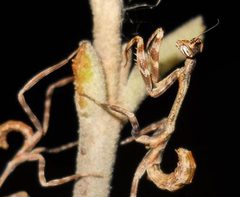
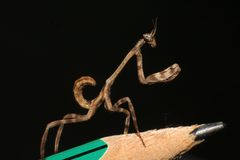
Phyllovates chlorophaea is a distinctive praying mantis native to the southern United States, particularly Texas and neighboring states. It is commonly known as the Texas unicorn mantis due to the prominent horn-like projection extending from the top of its . The species exhibits remarkable camouflage , with an elongated body and leaf-like appearance that aids in ambush . It is considered one of the most visually striking native species in North America and is highly regarded among mantis enthusiasts.

Pronunciation
How to pronounce Phyllovates chlorophaea: //fɪloʊˈveɪtiːz ˌklɔːrəˈfiːə//
These audio files are automatically generated. While they are not always 100% accurate, they are a good starting point.
Images
Distribution
Native to the southern United States, primarily Texas and neighboring states in the south-central region. The occurs in areas with suitable vegetation for its specialized camouflage hunting strategy.
Similar Taxa
- Phyllocrania paradoxa (ghost mantis)Both exhibit extreme leaf-like camouflage with flattened, expanded body structures; however, P. chlorophaea is distinguished by its prominent horn and is native to North America rather than Africa.
- Other native North American mantids (Stagmomantis spp., Tenodera sinensis)P. chlorophaea is readily distinguished from these more common by its unique projection and more elaborate cryptic ; most native mantids lack such specialized ornamentation.