
Ypsolopha falciferella
Walsingham, 1881
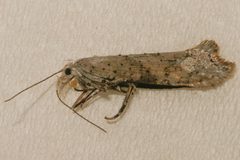
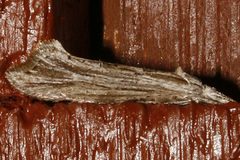
Ypsolopha falciferella is a in the Ypsolophidae, first described by Lord Walsingham in 1881. It occurs across much of North America and is associated with a variety of from mixed wood forests to semi-arid scrubland. The species is notable for its distinctive resting posture and specialized larval .
Pronunciation
How to pronounce Ypsolopha falciferella: /ɪpˈsɒləfə fɔːlˌsɪfərˈɛlə/
These audio files are automatically generated. While they are not always 100% accurate, they are a good starting point.
Identification
can be recognized by the typical Ypsolophid resting posture (bottom-up with stretched forward) and confirmed by association with the larval plant Prunus virginiana. The wingspan of approximately 21 mm and period from June to early October aid in field identification. Distinguishing Y. falciferella from congeneric requires examination of genitalia or molecular analysis.
Images
Appearance
Wingspan approximately 21 mm. exhibit the characteristic resting posture of Ypsolophidae: body inverted with stretched forward. Specific coloration and wing pattern details are not documented in available sources.
Habitat
Found in mixed wood forests, riparian , and semi-arid scrubland. The shows broad habitat across its North American range.
Distribution
North America: British Columbia, Alberta, Manitoba, Saskatchewan (Canada); Michigan, Maryland, Vermont (United States).
Seasonality
active from June to beginning of October.
Diet
Larvae feed specifically on Prunus virginiana (chokecherry). feeding habits are not documented.
Host Associations
- Prunus virginiana - larval plantLarvae feed on leaves, buds, and twigs
Life Cycle
Larvae live and feed in silken webs formed on leaves, buds, and twigs of the plant. occurs in an elongated silken cocoon attached to the host plant. Specific details regarding placement, number of instars, and stage are not documented.
Behavior
rest in an inverted position with stretched forward, a characteristic posture of the Ypsolophidae. Adults are infrequently attracted to light, making collection difficult. Larvae live solitarily within silken webs on plant tissues.
Ecological Role
Larval herbivore on Prunus virginiana; specific functions or interactions with or are not documented.
Human Relevance
No documented economic importance or direct human interactions. The may serve as an indicator of healthy Prunus virginiana stands in its native .
Similar Taxa
- Other Ypsolopha speciesShare the characteristic inverted resting posture and similar larval ; require genitalia examination or plant association for reliable separation
More Details
Taxonomic history
Originally described as Cerostoma falciferella by Walsingham in 1881, later transferred to Ypsolopha.
Collection challenges
Like many Ypsolophidae, are difficult to collect using standard methods. Light trapping is generally ineffective, and rearing from larvae is often unsuccessful due to the solitary and cryptic nature of larval stages.