Argyresthia alternatella
Kearfott, 1908
Juniper Seed Moth
Argyresthia alternatella is a small micro- in the Argyresthiidae, commonly known as the Juniper Seed Moth. It occurs across eastern and central North America from Ontario and Quebec south to Texas and Mississippi. The is associated with Juniperus species as larval , with larvae mining conifer needles.
Pronunciation
How to pronounce Argyresthia alternatella: /ˌɑːr.dʒɪˈrɛs.θi.ə ˌɔːl.tɚ.nəˈtɛ.lə/
These audio files are automatically generated. While they are not always 100% accurate, they are a good starting point.
Identification
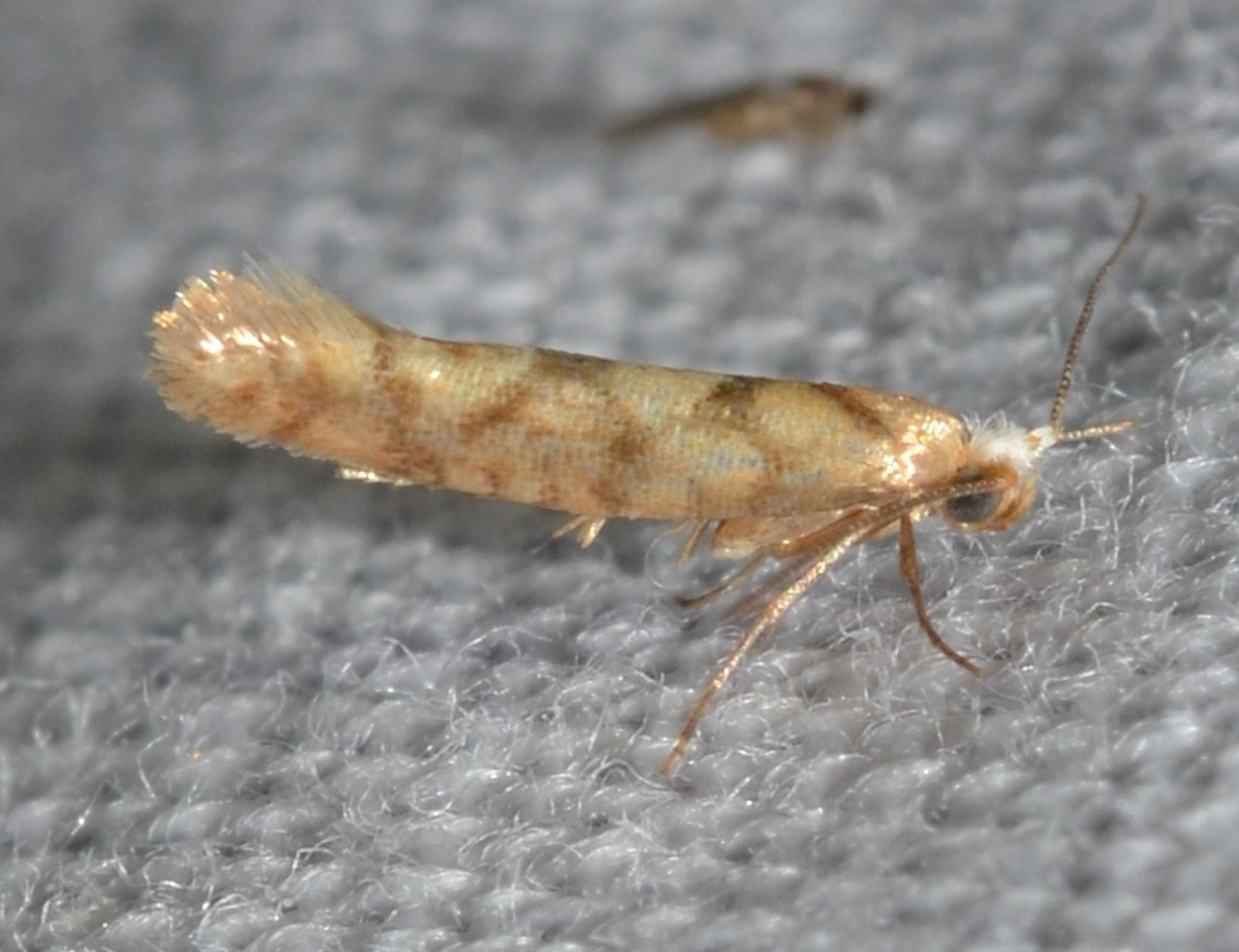
Distinguished from other Argyresthia by the specific arrangement of five brown costal spots and three margin spots on golden-ochreous forewings. The brown streak at the dorsal base and reticulated apex are additional diagnostic features. Genitalia dissection is typically required for definitive identification of Argyresthia species.
Images
Appearance
Wingspan 10–12 mm. Forewings golden-ochreous with five brown spots on the and three similar spots on the margin. A brown streak present on the dorsum at the base. Apex of forewing lightly reticulated with brown. Hindwings light fuscous. Overall a small, pale with contrasting brown spotting pattern.
Habitat
Associated with juniper ; dry mixed conifer forest with oak components at elevations around 7,000 feet has been documented in New Mexico. Specific habitat requirements beyond plant presence are not well documented.
Distribution
Eastern and central North America: Arkansas, Kentucky, Maryland, Massachusetts, Mississippi, New Jersey, Ohio, Oklahoma, Ontario, Quebec, Texas, and Vermont. Records suggest a broad distribution across the region with plants (Juniperus ) present.
Diet
Larvae feed on Juniperus (junipers). Specific feeding mode is needle mining—larvae feed between tissue layers of conifer needles. feeding habits are not documented.
Host Associations
- Juniperus - larval Larvae mine needles of juniper
Life Cycle
Larval stage is a needle miner in Juniperus. Complete details including number of per year, stage, and site are not documented.
Behavior
are attracted to light. Larvae are internal feeders, mining within conifer needles rather than feeding externally.
Ecological Role
As a needle miner, larvae may affect juniper foliage condition. Specific ecological impacts have not been quantified.
Human Relevance
Minor potential relevance to juniper or ornamental plantings through foliage damage; no significant economic or medical importance documented.
Similar Taxa
- Other Argyresthia speciesMany Argyresthia share small size, pale coloration with metallic or brown markings, and conifer association. Accurate identification to species level usually requires genitalia examination.
More Details
Family placement
Argyresthiidae has been treated historically as a of Yponomeutidae; modern classifications recognize it as a distinct . Sources may differ in family assignment.
Identification challenges
The Argyresthia contains over 50 in North America, most requiring microscopic examination of genitalia for reliable identification. Field identification to species is often tentative.