
Wockia
Heinemann, 1870
Species Guides
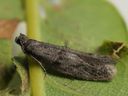
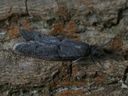
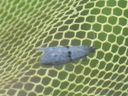
1- Wockia asperipunctella(Shaggy-spotted Wockia)
Wockia is a of small, dull gray in the Urodidae, containing approximately 10 described . The genus has a broad geographic distribution spanning the Holarctic region, East Asia, Southeast Asia, the Caribbean, and Central America. Larval development is rapid, with some species completing development from to in approximately four weeks, enabling multiple per year.
Pronunciation
How to pronounce Wockia: //ˈwɒkiə//
These audio files are automatically generated. While they are not always 100% accurate, they are a good starting point.
Identification
Small with relatively dull gray coloration. Male and female genitalia provide diagnostic characters for -level identification. W. magna can be distinguished from by its larger size. A key for identifying Palaearctic species is available based on genitalic .
Images
Distribution
Holarctic (W. asperipunctella); Borneo (W. balikpapanella); Mexico (W. chewbacca, W. mexicana); Jamaica (W. diabolica, W. tetroidon); Korea and Japan (W. koreana, W. magna); Vietnam (W. variata); Russia (W. koreana, W. magna, W. asperipunctella). Records also exist from Denmark, Norway, Sweden, and Vermont, USA.
Diet
Larvae feed on plants in the Salicaceae. W. asperipunctella larvae feed on willows (Salix) and poplars (Populus). W. chewbacca larvae feed on Casearia leaves, avoiding leaf .
Host Associations
- Salix - larval food plantfor W. asperipunctella
- Populus - larval food plantfor W. asperipunctella
- Casearia - larval food plantfor W. chewbacca; larvae avoid leaf
Life Cycle
Development time is relatively short, allowing multiple . W. chewbacca completes development from to pupa in approximately two weeks, followed by approximately ten days in a cocoon before .
More Details
Taxonomic history
W. funebrella Heinemann, 1870 was synonymized with W. asperipunctella (Bruand, 1851) based on examination of the specimen in the Zoological Institute RAS collection.
Species diversity
The contains approximately 10 described , with several species described recently: W. chewbacca and W. mexicana (2009), W. koreana (2008), W. diabolica, W. tetroidon, and W. variata (2013), and W. magna (2014).