
Urodidae
False Burnet Moths
Genus Guides
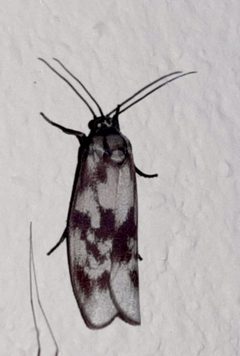
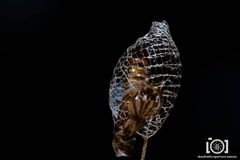
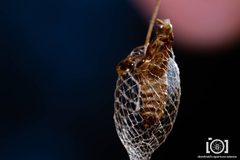
2is a of small to medium-sized commonly known as false burnet moths. It represents the sole family in the superfamily Urodoidea, containing three : Urodus, Spiladarcha, and Wockia. The family was historically classified within Yponomeutoidea but has been reclassified based on morphological and phylogenetic studies. Urodidae are notable for their distinctive pupal cocoons—open-mesh structures that are sometimes bright orange and suspended on long threads below leaves.
Pronunciation
How to pronounce Urodidae: //ˈjʊərədaɪdiː//
These audio files are automatically generated. While they are not always 100% accurate, they are a good starting point.
Identification
Resembles Zygaenidae: Procridinae at rest, but distinguished by male hindwing hairpencil and larval structure. Caterpillar setal placement and proleg are diagnostic. Pupal segments I–II are fixed (immobile), a distinctive trait. The open-mesh cocoon, often suspended on a long thread, is unique among Lepidoptera and readily identifies the .
Images
Distribution
Urodus and Spiladarcha occur in the Neotropics. Genus Wockia has a Holarctic distribution: W. asperipunctella occurs in Europe, with recent records from northern North America (possibly representing natural Holarctic range or recent introduction). Records exist from Denmark, Norway, Sweden, and the northeastern United States (Vermont).
Diet
Larvae feed on various tree . Urodus parvula has been recorded on Lauraceae (Persea), Fagaceae (Quercus), Sapotaceae (Sideroxylon), Erythroxylaceae (Erythroxylum), Rutaceae (Citrus), and Malvaceae (Hibiscus). Wockia asperipunctella has been reared from Salicaceae (Populus tremuloides, Salix).
Host Associations
- Persea - larval food plantLauraceae; avocado
- Quercus - larval food plantFagaceae
- Sideroxylon - larval food plantSapotaceae; formerly Bumelia
- Erythroxylum - larval food plantErythroxylaceae
- Citrus - larval food plantRutaceae
- Hibiscus - larval food plantMalvaceae
- Populus tremuloides - larval food plantquaking aspen
- Salix - larval food plantwillow
Life Cycle
Pupa formed within an open-mesh cocoon, which may be bright orange in color and is sometimes suspended on a very long thread below a leaf. Larval structure and setal placement are diagnostic for the . Pupal segments I–II are fixed.
Behavior
Larvae of Urodus parvula are webworms that construct silken webs on plants. The pupal cocoon is frequently suspended on an extended thread, a distinctive behavioral trait.
Human Relevance
Urodus parvula has been recorded on cultivated plants including avocado (Persea) and citrus, suggesting potential minor economic significance as a pest of fruit trees, though impact appears limited.
Similar Taxa
- Zygaenidae: ProcridinaeSimilar resting posture and general appearance; distinguished by 's male hindwing hairpencil, larval , and unique open-mesh pupal cocoon.
- GalacticidaeHistorically lumped with due to superficial similarities; separated based on morphological and phylogenetic differences.
- YponomeutidaeFormerly classified together in Yponomeutoidea; distinguished by abdominal sternum II and other structural features.
More Details
Taxonomic History
has undergone extensive taxonomic revision. Previously placed in Yponomeutoidea (Kyrki, 1984, 1988), then associated with Galacticidae or (Heppner, 1991, 1997, 1998). Now placed in its own superfamily Urodoidea within the lower Apoditrysia. In 2020, Ustyurtiidae was described as a second within Urodoidea.
Biological Knowledge Gaps
remains poorly known for most . records are sparse and largely limited to Urodus parvula and Wockia asperipunctella. sequencing is needed to resolve closest relatives within Apoditrysia.