
Rudenia leguminana
(Busck, 1907)
Black-tipped Rudenia Moth
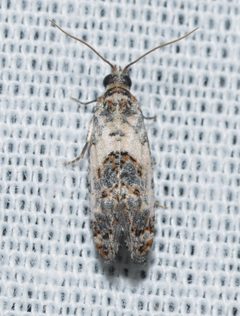
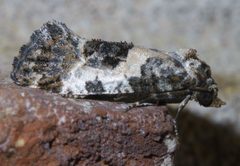
Rudenia leguminana is a small tortricid known as the black-tipped rudenia moth. It occurs across much of the United States and parts of Mexico. The is associated with leguminous plants, with larvae feeding on Fabaceae species.
Pronunciation
How to pronounce Rudenia leguminana: /ruːˈdeɪniə ˌleɡjəˈmaɪnənə/
These audio files are automatically generated. While they are not always 100% accurate, they are a good starting point.
Identification
The small forewing length (6–7 mm) and association with Fabaceae plants may aid identification. The may be distinguished from similar Rudenia species by geographic range and host plant records, though specific diagnostic characters are not detailed in available sources.
Images
Habitat
Associated with supporting its Fabaceae plants, including mesquite (Prosopis glandulosa) and Jerusalem thorn (Parkinsonia ). These hosts occur in arid and semi-arid regions, grasslands, and disturbed areas.
Distribution
United States: from southern Connecticut to Florida, and from the mid-west to California. Mexico: recorded from Sinaloa, Puebla, Nuevo León, and Coahuila.
Diet
Larvae feed on various Fabaceae , specifically Prosopis glandulosa (honey mesquite), Parkinsonia (Jerusalem thorn), and pods of Gleditsia japonica (Japanese honey locust). feeding habits are not documented.
Host Associations
- Prosopis glandulosa - larval honey mesquite
- Parkinsonia aculeata - larval Jerusalem thorn
- Gleditsia japonica - larval pods specifically consumed
Life Cycle
Larval stage feeds internally or externally on plant pods and foliage. Specific details on , number of , and stage are not documented.
Ecological Role
Larval herbivore on Fabaceae ; may contribute to seed or pod damage. Specific ecological impacts are not quantified.
Human Relevance
Minor potential as a pest of ornamental Fabaceae such as Gleditsia japonica. No significant economic impact documented.
Similar Taxa
- Other Rudenia speciesSimilar size and ; differentiation may require genitalia examination or plant association.
- Other Cochylini tortricidsSmall size and general tortricid wing shape; specific identification relies on detailed morphological study.
More Details
Taxonomic history
Originally described as Phalonia leguminana by Busck in 1907, later transferred to Rudenia.