
Olethreutes trinitana
(McDunnough, 1931)
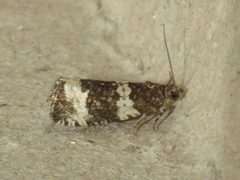
Olethreutes trinitana is a small tortricid first described by James Halliday McDunnough in 1931. The species is known from scattered records across central and eastern North America, primarily from the Canadian prairie provinces and northern New England. Like other members of the Olethreutinae , it is presumed to have a concealed larval stage, though specific biological details remain poorly documented. The Olethreutes is diverse, with many species requiring dissection or molecular analysis for reliable identification.
Pronunciation
How to pronounce Olethreutes trinitana: //oʊˌlɛθˈruːtiːz trɪnɪˈtɑːnə//
These audio files are automatically generated. While they are not always 100% accurate, they are a good starting point.
Identification
-level identification of Olethreutes trinitana requires examination of genitalia or , as external overlaps substantially with . The Olethreutes is characterized by forewings with a somewhat rectangular shape and variable banding or mottled patterns, but specific diagnostic features for O. trinitana are not established in accessible literature. Dissection of the male or female sterigma is standard practice for definitive identification within this genus.
Images
Distribution
Documented from Alberta, Manitoba, and Saskatchewan in Canada, and from Vermont in the United States. The disjunct distribution pattern suggests the may occur more broadly in and hemiboreal zones of North America, though survey effort is uneven.
Similar Taxa
- Olethreutes arcuellaAnother Olethreutes with documented and unusual ; both species require careful dissection for separation
- Olethreutes exoletumCongeneric with similar size and wing pattern, distinguishable only through genitalia examination
More Details
Taxonomic history
Originally described as Argyroploce trinitana by McDunnough in 1931, later transferred to Olethreutes. The specific epithet 'trinitana' likely refers to the type locality, though this is not confirmed in accessible sources.