
Olethreutes permundana
(Clemens, 1860)
Raspberry Leafroller Moth, Raspberry Leafroller
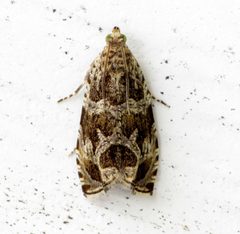
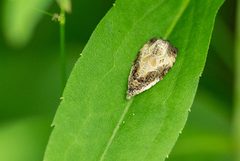
Olethreutes permundana, commonly known as the raspberry leafroller , is a small tortricid moth described by James Brackenridge Clemens in 1860. The species is notable for its larval habit of tying leaves together on plants. have a wingspan of 17–22 mm. The species has been recorded across eastern North America with a broad host plant range including Rubus, Rosa, Fragaria, and numerous woody shrubs and trees.
Pronunciation
How to pronounce Olethreutes permundana: /oʊˌlɛθriˈuːtiːz pɜːrˈmʌndənə/
These audio files are automatically generated. While they are not always 100% accurate, they are a good starting point.
Identification
The can be identified by its small size (17–22 mm wingspan) and association with leaf-rolling larval damage on its diverse plants. The MONA/Hodges number 2817 provides a standardized reference for North American identification. Specific diagnostic characters distinguishing it from congeneric species are not detailed in available sources.
Images
Appearance
have a wingspan of 17–22 mm. As a member of Tortricidae, the likely exhibits the characteristic bell-shaped wing posture at rest typical of leafroller moths, though specific coloration and pattern details are not provided in available sources.
Habitat
Associated with supporting its broad range of plants including Spiraea salicifolia, Physocarpus opulifolius, Rubus hispidus, Rosa, Fragaria, Vaccinium pallidum, Gaylussacia, Rhus typhina, Corylus, Myrica, and Carya. These encompass riparian areas, forest edges, shrublands, and agricultural or horticultural settings where Rubus and related occur.
Distribution
Recorded from the eastern United States, southeastern Canada, and northwestern North America. Specific distribution records include Manitoba (Canada) and Vermont (USA).
Diet
Larvae are leaftiers that feed within tied or rolled leaves. Recorded plants include Spiraea salicifolia, Physocarpus opulifolius, Rubus hispidus, Rosa , Fragaria, Vaccinium pallidum, Gaylussacia, Rhus typhina, Corylus, Myrica, and Carya. feeding habits are not documented.
Host Associations
- Spiraea salicifolia - larval recorded larval food plant
- Physocarpus opulifolius - larval recorded larval food plant
- Rubus hispidus - larval recorded larval food plant
- Rosa - larval -level record
- Fragaria - larval -level record
- Vaccinium pallidum - larval recorded larval food plant
- Gaylussacia - larval -level record
- Rhus typhina - larval recorded larval food plant
- Corylus - larval -level record
- Myrica - larval -level record
- Carya - larval -level record
Life Cycle
Larvae are leaftiers, constructing shelters by tying or rolling leaves together. Specific details regarding placement, sites, number of per year, and stage are not documented in available sources.
Behavior
Larval involves tying or rolling leaves to create protected feeding shelters. behavior patterns including activity, mating, and oviposition are not documented.
Ecological Role
As a leaf-rolling herbivore, larvae likely function as primary consumers in , potentially serving as prey for and . The broad plant range suggests ecological flexibility, though specific functions are not documented.
Human Relevance
The "raspberry leafroller" suggests potential economic significance to Rubus , though specific damage assessments or management recommendations are not provided in available sources. The is referenced in citizen science platforms including iNaturalist with over 1,700 observations.
Similar Taxa
- Olethreutes exoletumCongeneric in the same , potentially overlapping in distribution and use; distinguished by specific morphological characters and MONA/Hodges number (2820 for O. exoletum versus 2817 for O. permundana)
More Details
Taxonomic Authority
Originally described as Exartema permundana by James Brackenridge Clemens in 1860; later transferred to Olethreutes.
MONA/Hodges Number
2817 — a standardized numbering system for North American Lepidoptera used in identification resources.