
Episimus tyrius
Heinrich, 1923
Maple Tip Borer Moth, Maple Leaftier Moth
Episimus tyrius, commonly known as the Maple Tip Borer or Maple Leaftier Moth, is a tortricid moth described by Heinrich in 1923. The species is primarily associated with maple trees, with larvae that bore into leaf tips or tie leaves together. It occurs in the eastern United States, where it has been documented from New York south to Florida and west to Texas. The species is relatively well-documented, with over 500 observations recorded.
Pronunciation
How to pronounce Episimus tyrius: /ɛˈpɪsɪməs ˈtaɪrɪəs/
These audio files are automatically generated. While they are not always 100% accurate, they are a good starting point.
Identification
can be distinguished from other Episimus by forewing pattern elements, though precise diagnostic features require examination of genitalia. The combination of geographic range (eastern United States) and association with maple supports identification. Similar species in the Episimus include E. argutanus and E. vaccinii, which differ in host plant associations and subtle wing pattern details. Dissection of male genitalia is often necessary for definitive identification.
Images
Appearance
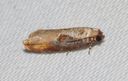
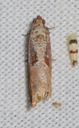
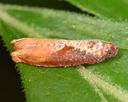
are small with wingspans typical of the Episimus. Forewings are marked with variable patterns of brown, gray, and sometimes reddish or purplish tones. The specific epithet "tyrius" refers to a purple or Tyrian dye coloration, suggesting reddish-purple markings may be present. Wing patterns include distinct bands or mottling that aid in camouflage against bark and foliage. are . Larvae are small, pale caterpillars with a dark capsule.
Habitat
Associated with deciduous forests and wooded areas where maple trees (Acer spp.) are present. Found in both natural forests and urban or suburban settings with maple plantings. Larval is specifically within maple foliage, particularly at leaf tips.
Distribution
Eastern United States, from New York south to Florida and west to Texas. Distribution corresponds with the range of maple .
Seasonality
have been recorded from spring through fall, with peak activity varying by latitude. Multiple per year are likely given the extended period observed.
Diet
Larvae feed on maple (Acer spp.) leaves, boring into leaf tips or tying leaves together with silk to form shelters. Specific maple utilized include those in the section Acer (sugar maple group) and possibly section Rubra (red maple group).
Host Associations
- Acer - larval maple
- Acer saccharum - larval sugar maple
- Acer rubrum - larval red maple; inferred from range overlap
Life Cycle
Complete with , larva, pupa, and stages. Larvae are the primary feeding stage, developing within tied or bored maple leaves. occurs within the larval shelter or in leaf litter. Multiple per year are probable based on observation records spanning several months.
Behavior
Larvae construct shelters by tying maple leaves together with silk or boring into leaf tips, feeding within these protected spaces. are and attracted to light. Limited information available on adult beyond and mating.
Ecological Role
As a herbivore on maple, larvae contribute to natural leaf damage and nutrient cycling in forest . levels are generally not sufficient to cause significant tree mortality, though localized defoliation may occur. Serves as prey for and other natural enemies.
Human Relevance
Occasional minor pest of ornamental maples in urban settings. Not considered a significant economic pest. Presence indicates healthy maple and contributes to biodiversity documentation.
Similar Taxa
- Episimus argutanusSimilar size and wing pattern; differs in preference and genitalia structure
- Episimus vacciniiOverlapping range; associated with Vaccinium (blueberry/huckleberry) rather than maple
- Croesia semipurpuranaSimilar maple-feeding tortricid; differs in larval (leafroller vs. tip borer) and pattern
More Details
Taxonomic History
Described by Carl Heinrich in 1923. The specific epithet "tyrius" refers to Tyrian purple, a historically significant dye, likely alluding to coloration in the original specimen.
Observation Frequency
With 595 iNaturalist observations, this is among the more frequently recorded in the Episimus, suggesting it is either genuinely common or more readily detected due to association with conspicuous plants.
Larval Damage
Feeding damage is characterized by tied or rolled leaf tips on maple, often with visible within the shelter. This distinguishes it from free-feeding tortricid larvae.