
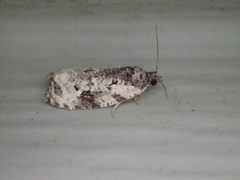
Apotomis albeolana
(Zeller, 1875)
A small tortricid in the Apotomis, described by Zeller in 1875. The is known from northeastern North America with confirmed records in Vermont and surrounding regions. Like other members of Olethreutinae, it is presumed to have concealed larval habits, though specific biological details remain poorly documented.
Pronunciation
How to pronounce Apotomis albeolana: /æpəˈtoʊmɪs ælbiˈoʊlænə/
These audio files are automatically generated. While they are not always 100% accurate, they are a good starting point.
Identification
Members of Apotomis can be distinguished from similar tortricid by genitalic characters, particularly in the male valva and female sterigma. Specific diagnostic features for A. albeolana require examination of the original description or ; no comprehensive modern redescription is readily available. Forewing pattern elements typical of the genus include pale ground color with variable darker markings, but -level identification within Apotomis generally requires dissection and reference to specialized taxonomic literature.
Images
Distribution
Northeastern United States; confirmed from Vermont. Distribution records are sparse and likely underrepresent actual range due to limited survey effort.
Similar Taxa
- Apotomis capreanaAnother North American Apotomis with overlapping geographic range; external similarity necessitates genitalic examination for reliable separation.
- Other Olethreutinae genera (e.g., Endopiza, Gretchena)Similar size and general forewing shape; Apotomis distinguished by specific genitalic architecture and larval where known.
More Details
Taxonomic history
Originally described as Penthina albeolana by Zeller in 1875, later transferred to Apotomis. The basionym reflects historical classification within a broader concept of Penthina that has since been subdivided.
Data limitations
Despite over 1,200 iNaturalist observations for the Apotomis, -level determination is rarely reported, indicating identification challenges. Specific biological information for A. albeolana appears absent from major lepidopteran databases and faunal works.