Apotomis capreana
(Hübner, 1817)
Sallow Apotomis Moth
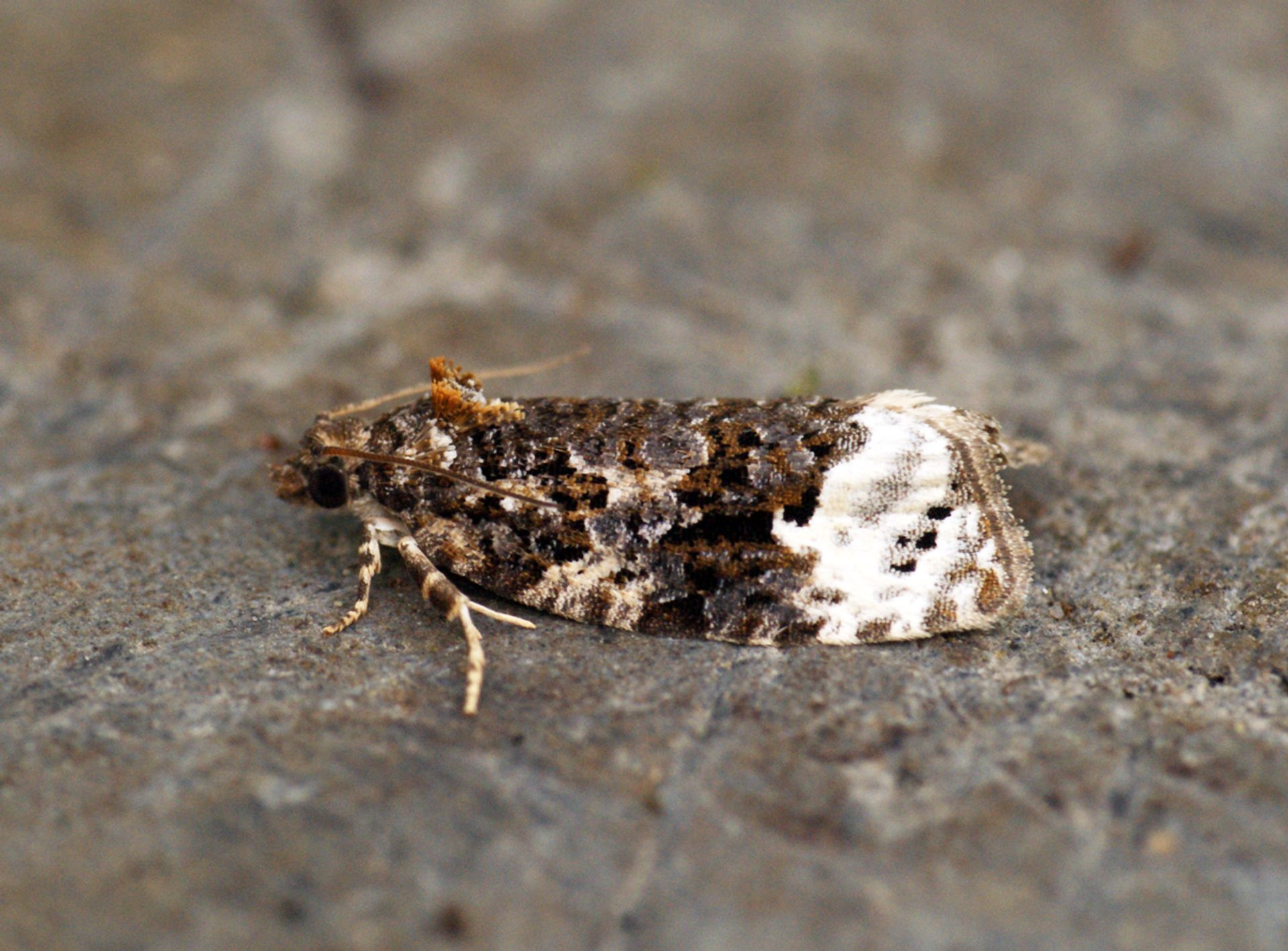
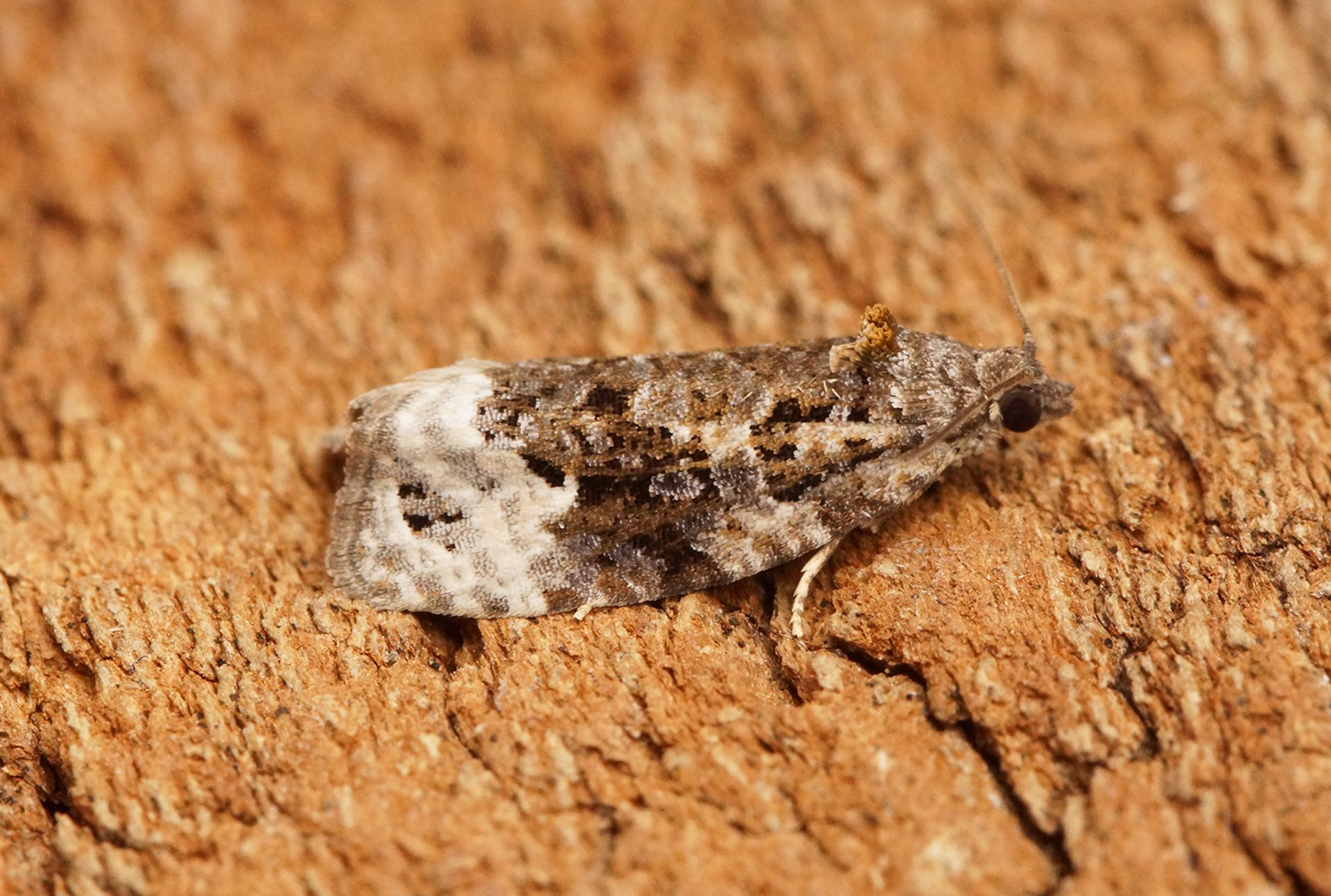
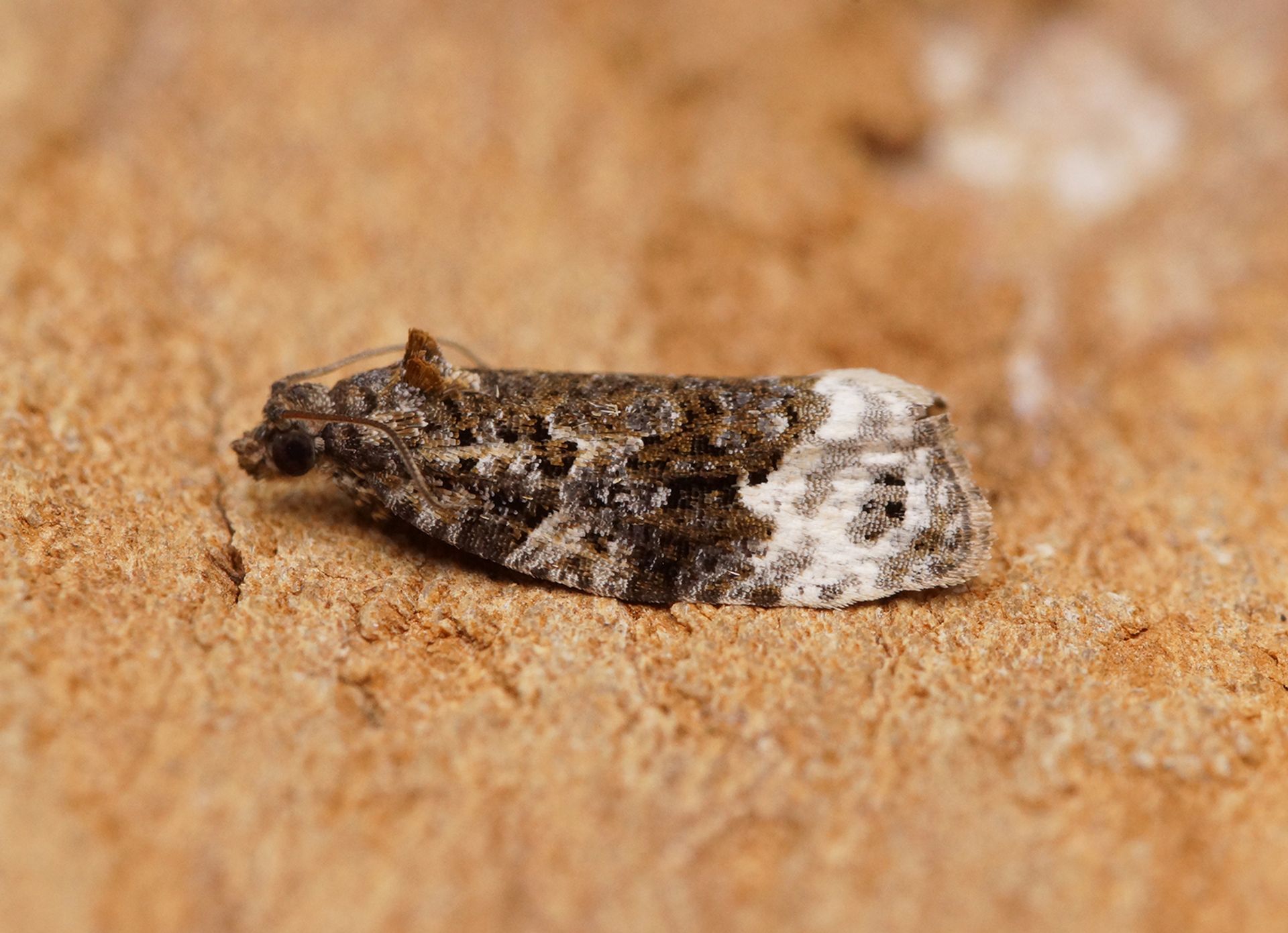
Apotomis capreana is a small tortricid with a Palearctic distribution centered on Europe and extending eastward. are active in mid-summer. The is tightly associated with Salix caprea, with larvae feeding inside spun leaves of this plant.
Pronunciation
How to pronounce Apotomis capreana: /əˈpɒtəmɪs kəˈpriːənə/
These audio files are automatically generated. While they are not always 100% accurate, they are a good starting point.
Identification
The combination of white to ochreous forewings with brown basal patch and central fascia, the abruptly indented edge of the fascia, and the subapical cluster of black dots distinguishes this from similar Apotomis. The specific association with Salix caprea provides additional supporting evidence.
Images
Habitat
Associated with stands of Salix caprea (goat willow/sallow), occurring in woodland edges, scrub, hedgerows, and other where this shrub grows.
Distribution
Europe (absent from Iceland, Iberian Peninsula, most of Balkan Peninsula, and Ukraine) eastward through the eastern . Present in Belgium.
Seasonality
on wing June to August.
Diet
Larvae feed on Salix caprea, consuming leaf tissue inside spun leaves.
Host Associations
- Salix caprea - larval plantLarvae feed inside spun leaves
Behavior
Larvae construct shelters by spinning leaves together and feed within these concealed spaces.
Ecological Role
Herbivore specializing on Salix caprea; contributes to leaf damage and nutrient cycling in willow-dominated .
Similar Taxa
- Other Apotomis speciesMany Apotomis share similar wing patterns; A. capreana is distinguished by the specific pattern of the central fascia indentation and subapical dot cluster, plus confirmed plant association with Salix caprea.
More Details
Etymology
Specific epithet 'capreana' derives from the larval plant Salix caprea.
Historical description
Julius von Kennel provided a full description of this .