Satronia
Heinrich, 1926
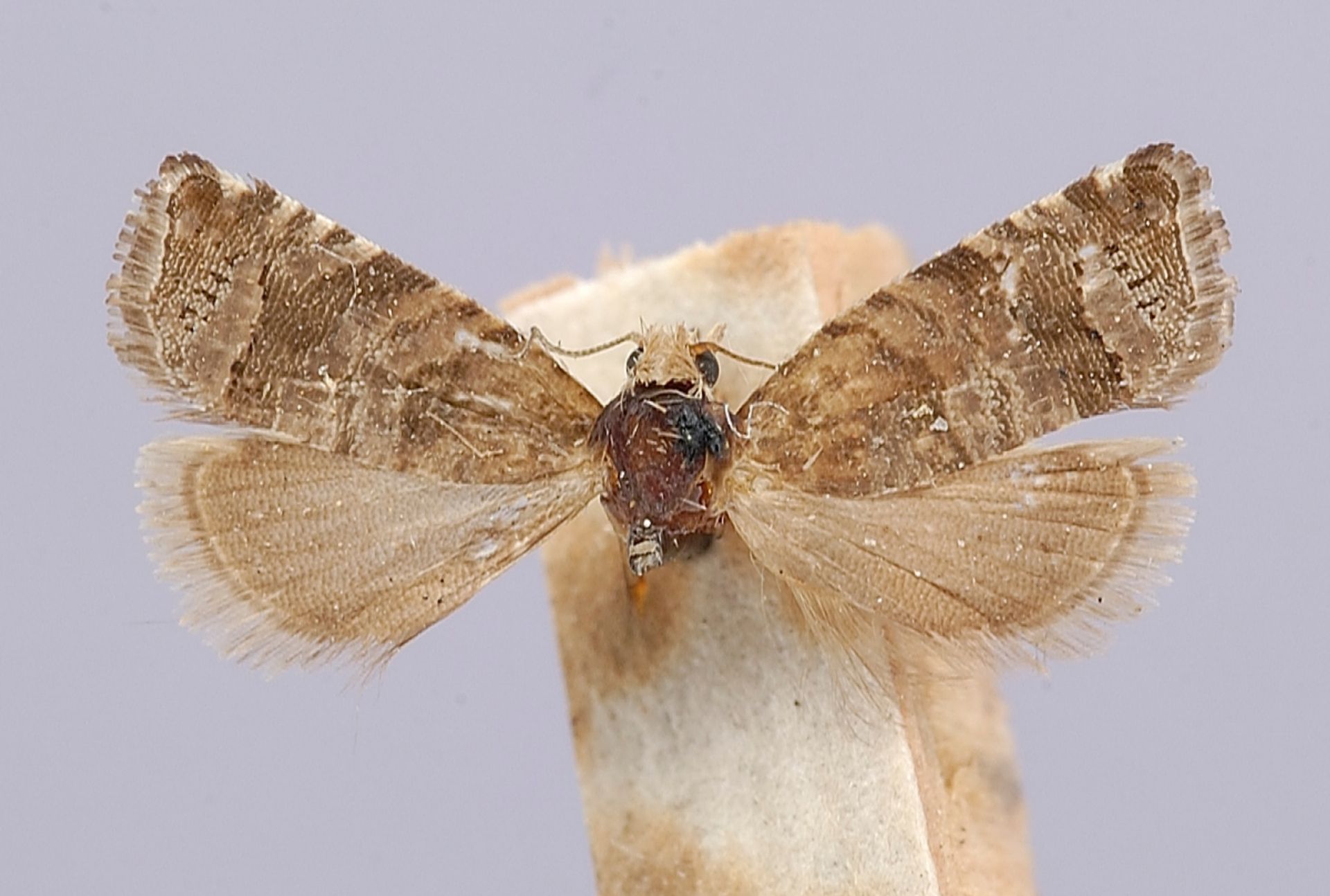
Satronia is a of tortrix in the tribe Grapholitini, erected by Carl Heinrich in 1926. The genus remained with only S. tantilla until 2011, when modern revisionary work expanded it to thirteen known . It is characterized by distinctive forewing and occurs across the Neotropics and subtropical North America. The genus is morphologically well-defined but biologically poorly known.
Pronunciation
How to pronounce Satronia: /satrɔːniə/
These audio files are automatically generated. While they are not always 100% accurate, they are a good starting point.
Identification
Distinguished from other Grapholitini by the combination of slender forewing, simple markings, and absence of a terminal row of dots on the forewing. The presence of strigulae and dots in the subterminal fascia, together with the well-developed costal half of the fascia, separates it from superficially similar . Male genitalia with the uncus-like lobe bearing long ventro-terminal setae is diagnostic.
Images
Appearance
have slender forewings with simple markings and lack the terminal row of dots common in related . The subterminal fascia contains strigulae and dots. The costal half of the fascia is well developed, often extending near the middle of the median posteriorly. Male genitalia possess an uncus-like lobe marked by long ventro-terminal setae, interpreted as a probable remnant of socii. Female genitalia, known from two , feature a broad plate-shaped sterigma, large membranous ostium bursae area, weak antrum , and a single signum.
Habitat
have been collected at altitudes ranging from 5 to 1100 meters. Specific associations, vegetation types, and microhabitat preferences remain undocumented.
Distribution
Florida, U.S.A.; Rica; Brazil (Federal District, Goiás, Minas Gerais, Alagoas, Santa Catarina).