Epinotia cruciana
(Linnaeus, 1761)
willow tortrix, Willow Tortrix Moth
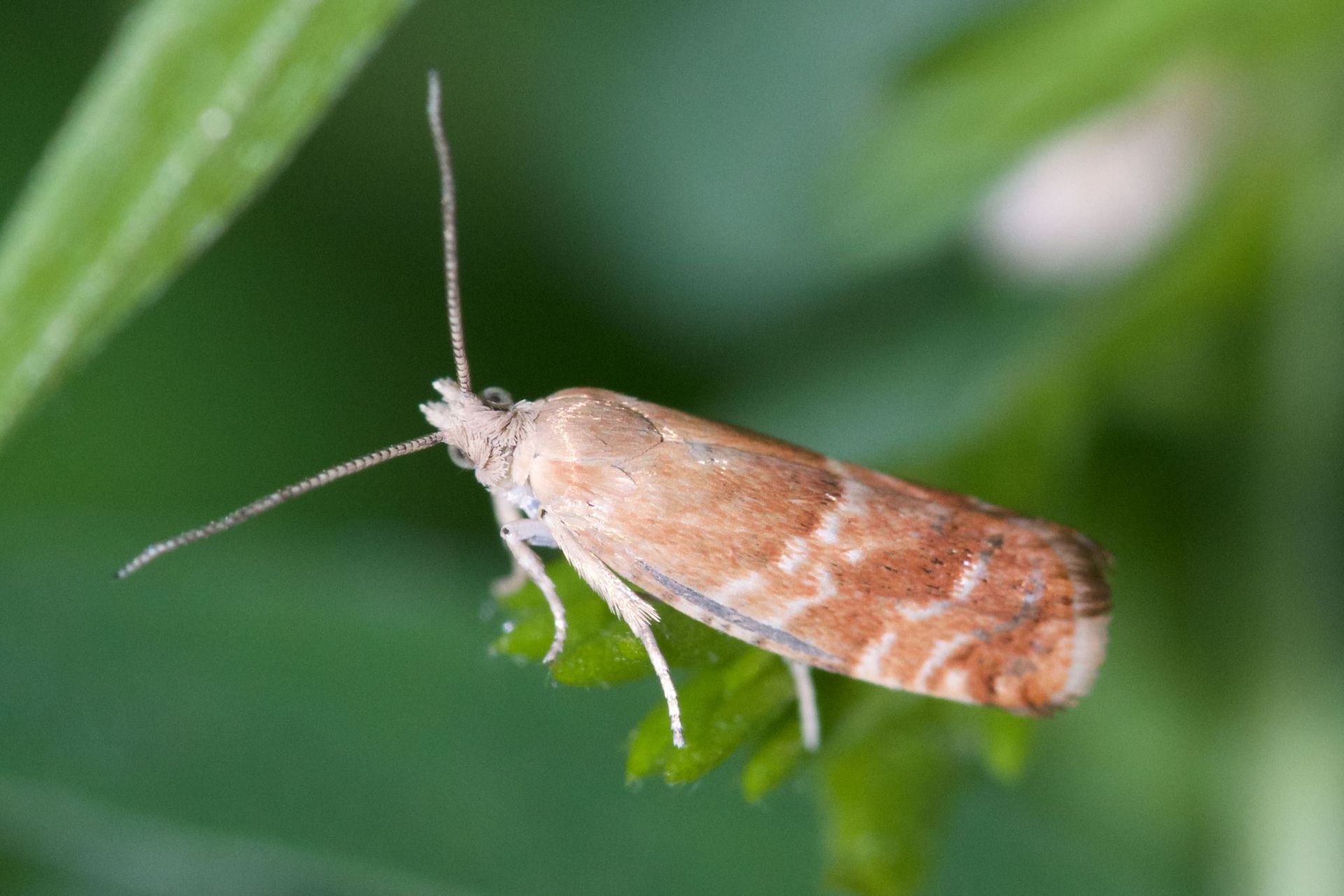
Epinotia cruciana, commonly known as the willow tortrix, is a small tortricid with a wingspan of 12–15 mm. The is distinguished by its characteristic wing pattern featuring pale brown ground color with dark brown markings on the forewings that form a cross-like shape, referenced in its specific epithet "cruciana". It has a broad distribution spanning Europe, Asia, and North America. The larvae are specialized feeders on willows and sallows, particularly Salix repens.


Pronunciation
How to pronounce Epinotia cruciana: /ɛpɪˈnoʊʃə ˈkruːsiːˌæna/
These audio files are automatically generated. While they are not always 100% accurate, they are a good starting point.
Identification
The cross-shaped dark brown pattern on the pale brown forewings is diagnostic. This pattern distinguishes E. cruciana from other Epinotia and similar small tortricids. The specific wing pattern should be visible with magnification or good lighting conditions.
Images
Habitat
Associated with willow including wetlands, fens, and areas where Salix grow. Larval habitat consists of terminal shoots of willow and sallow plants.
Distribution
Europe to Japan, and North America. Present in Belgium with records from Flemish and Walloon regions including Antwerpen province.
Seasonality
are active from June to early August.
Diet
Larvae feed on various sallows and willows (Salix ), primarily Salix repens. do not feed; their mouthparts are reduced or non-functional for feeding.
Host Associations
- Salix repens - larval primary ; larva spins together leaves of terminal shoot and feeds within
- Salix - larval various sallows and willows
Life Cycle
Larva spins together leaves of a terminal shoot of the plant and feeds within this protective structure. likely occurs within the larval shelter or in leaf litter, though specific details are not documented in available sources.
Behavior
Larvae construct shelters by spinning together leaves of terminal shoots, feeding within this protected microhabitat. This reduces exposure to and environmental conditions.
Ecological Role
Herbivore that contributes to nutrient cycling in willow-dominated wetland . As a feeder on Salix, it participates in the of these , serving as prey for and other natural enemies.
Human Relevance
Minor economic significance; larvae may occasionally be considered a pest in willow plantations or nurseries, but generally not a of major concern. Has been studied in the context of lepidopteran susceptibility to Bacillus thuringiensis toxins in research settings.
Similar Taxa
- Other Epinotia speciesSimilar size and general tortricid ; distinguished by the characteristic cross-shaped forewing pattern of E. cruciana
- Other OlethreutinaeSimilar small size and wing shape; require examination of wing pattern details for accurate identification