
Chlidanotinae
Meyrick, 1906
Genus Guides
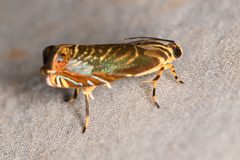
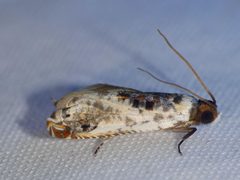
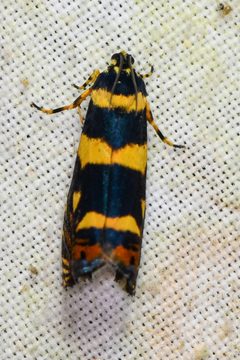
1Chlidanotinae is a of tortricid moths established by Meyrick in 1906. It comprises three recognized tribes: Chlidanotini, Hilarographini, and Polyorthini. The subfamily is predominantly distributed in tropical and subtropical regions, with some extending into temperate areas of Europe and Asia. Members exhibit morphological diversity in genital structures, including distinctive male secondary sexual characters such as hairpencils and specialized saccus-vinculum complexes.
Pronunciation
How to pronounce Chlidanotinae: //ˌklɪdəˈnɒtɪniː//
These audio files are automatically generated. While they are not always 100% accurate, they are a good starting point.
Identification
Chlidanotinae can be distinguished from other tortricid by male genitalic features including a broad saccus-vinculum complex, presence of hami (hook-like structures), and often hairpencils arising from abdominal segment VIII. Hindwing venation with wide basal separation of M2 and M3 is characteristic. Forewing patterns vary considerably among tribes; in wing shape, size, and markings has been documented in some .
Images
Habitat
Tropical and subtropical forests; some occur in southern coastal regions of China and Southeast Asia. Specific requirements are poorly documented for most species.
Distribution
Tropical regions worldwide with extensions into subtropical and temperate zones; recorded from southern China, Southeast Asia, northern Portugal, northern Spain, and Peru.
Host Associations
- Cinnamomum cassia - larval for Polylopha cassiicola
- Cinnamomum camphora - larval for Polylopha cassiicola
Life Cycle
Larvae of at least some feed on tree foliage; laboratory rearing from larva to pupa and has been demonstrated for Polylopha cassiicola. Complete details are unknown for most species.
Human Relevance
Polylopha cassiicola is an economic pest of camphor trees (Cinnamomum camphora) in southern China. Other have no documented economic importance.
Similar Taxa
- TortricinaeLacks the broad saccus-vinculum complex, hami, and abdominal hairpencils characteristic of Chlidanotinae; hindwing venation typically with M2 and M3 closer basally
- OlethreutinaeDiffers in male genitalic structure and typically lacks the specialized abdominal segment VIII modifications found in Chlidanotinae
Sources and further reading
- BugGuide
- Wikipedia
- iNaturalist taxon
- NCBI Taxonomy
- Catalogue of Life
- DNA Barcoding reveals sexual dimorphism in Isotrias penedana Trematerra, 2013 (Lepidoptera: Tortricidae, Chlidanotinae)
- Description of a new genus in the Chlidanotini and review of phylogenetic relationships among chlidanotine tribes (Lepidoptera: Tortricidae: Chlidanotinae)
- Nuclear and mitochondrial genomes of Polylopha cassiicola: the first assembly in Chlidanotinae (Tortricidae).