
Coptotriche malifoliella
(Clemens, 1860)
Appleleaf Trumpet Miner
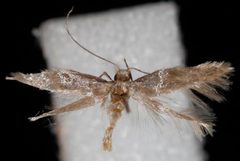
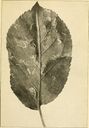
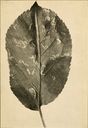
A small in the Tischeriidae known for its distinctive larval leaf-mining on apple and hawthorn. The was described from North America in 1860 and is recognized by the Appleleaf Trumpet Miner, referring to the trumpet-shaped mines created by larvae.
Pronunciation
How to pronounce Coptotriche malifoliella: /ˌkɒptəˈtraɪki meɪlɪfoʊˈliːɛlə/
These audio files are automatically generated. While they are not always 100% accurate, they are a good starting point.
Identification
are small, nondescript typical of Tischeriidae. Larvae are identified by their distinctive trumpet-shaped leaf mines on apple (Malus) and hawthorn (Crataegus) leaves, with the mine expanding from a narrow linear beginning to a broad blotch. The specific epithet 'malifoliella' references apple foliage.
Images
Habitat
Associated with deciduous woodland edges, orchards, and areas where plants (Malus coronaria, Malus domestica, Crataegus coccinea) occur.
Distribution
North America: Ontario (Canada), District of Columbia, Indiana, Kentucky, Massachusetts, New Jersey, New York, Ohio, Pennsylvania, and Texas (USA).
Diet
Larvae feed on leaves of Crataegus coccinea, Malus coronaria, and Malus domestica, creating internal leaf mines. feeding habits are not documented.
Host Associations
- Crataegus coccinea - larval
- Malus coronaria - larval
- Malus domestica - larval
Life Cycle
Larvae mine leaves of plants; specific details of , pupal, and stages are not documented in available sources.
Behavior
Larvae create trumpet-shaped leaf mines, beginning as narrow linear tracks that expand into broader blotches.
Ecological Role
; may cause minor damage to plant foliage. Specific ecological impacts are not documented.
Human Relevance
Minor potential pest of cultivated apple (Malus domestica) due to leaf mining damage.
Similar Taxa
- Other Coptotriche speciesSimilar small size and leaf-mining habit; distinguished by plant association and mine
- Other TischeriidaeSimilar -level characteristics; identification requires examination of genitalia or -specific mine patterns
More Details
Original description
First described as Tischeria malifoliella by James Brackenridge Clemens in 1860, later transferred to Coptotriche.
Nomenclature note
The specific epithet 'malifoliella' derives from Latin 'malus' (apple) and 'folium' (leaf), with the diminutive suffix '-ella'.