
Nemapogon acapnopennella
(Clemens, 1863)
Pronunciation
How to pronounce Nemapogon acapnopennella: /nɛˌmæpəˈɡoʊn əˌkæpnəʊpɪˈnɛlə/
These audio files are automatically generated. While they are not always 100% accurate, they are a good starting point.
Identification
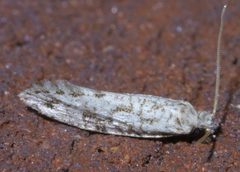
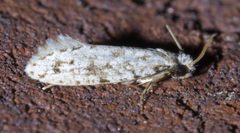
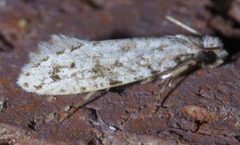
The can be distinguished from other Nemapogon species by its North American distribution and specific wing pattern characteristics, though detailed diagnostic features require examination. The small size (approximately 9 mm wingspan) is consistent with the .
Images
Appearance
Small with wingspan approximately 9 mm.
Distribution
North America: recorded from Arkansas, British Columbia, District of Columbia, Florida, Illinois, Indiana, Maine, Maryland, Mississippi, Ohio, Oklahoma, Ontario, Quebec, South Carolina, Tennessee, and Texas. Additional records from Alberta, Manitoba, and Saskatchewan in Canada.
Seasonality
recorded on wing from February to November, indicating a prolonged or potentially multivoltine period.