
Opogona
Zeller, 1853
fungus moths
Species Guides
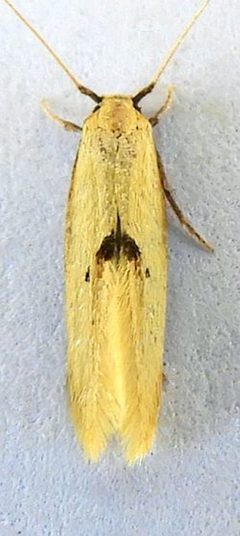
4- Opogona arizonensis
- Opogona
- Opogona omoscopa(Detritus Moth)
- Opogona sacchari(banana moth)
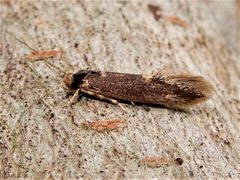
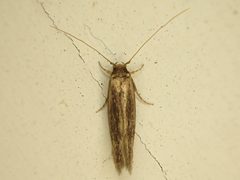
Opogona is a of fungus moths in the Tineidae, representing the type genus of Hieroxestinae. The genus is most diverse in tropical regions, with approximately 30 known from Australia alone. Some species have been introduced outside their native ranges, including the banana (O. sacchari) and O. omoscopa in Europe. The genus exhibits exceptional radiation on St Helena Island in the South Atlantic, where 41 species occur, 31 of them .
Pronunciation
How to pronounce Opogona: /ˌoʊpəˈɡoʊnə/
These audio files are automatically generated. While they are not always 100% accurate, they are a good starting point.
Identification
Members of Opogona can be distinguished from other Tineidae by their placement in Hieroxestinae, characterized by specific morphological features associated with this group. The is considered to contain the core group of Hieroxestinae and is delimited sensu lato. -level identification typically requires examination of genitalia .
Images
Habitat
Tropical and subtropical environments predominate, with highest diversity in tropical regions. On St Helena Island, occupy varied across the island's unique . Some species have adapted to glasshouse and cultivated environments in temperate regions where introduced.
Distribution
Native distribution centered in tropical regions worldwide, with major concentrations in Australia (approximately 30 ), Africa, and Asia. Exceptional radiation on St Helena Island (41 species, 31 endemic). Introduced established in Europe including Belgium, Denmark, Finland, France, Germany, Greece, Hungary, Italy, Netherlands, Poland, Portugal, Spain, Sweden, Switzerland, and United Kingdom. Also introduced to North America (Florida, Hawaii), Central America and Caribbean (Barbados, Bermuda, Honduras), and South America (Brazil, Peru, Venezuela).
Behavior
are attracted to ultraviolet light sources, as documented in blacklighting surveys. Larval stages of some are associated with plant material; O. sacchari larvae have been recorded feeding on banana, pineapple, bamboo, maize, sugarcane, and various glasshouse crops. O. omoscopa larvae attack bird of paradise plants and strawberries.
Human Relevance
Some are economically significant pests. The banana (O. sacchari) attacks banana, pineapple, sugarcane, and ornamental plants, with potential for spread through transport of plant material and global warming. O. omoscopa damages bird of paradise plants and strawberries. These species have established in European glasshouses and outdoor environments.
Similar Taxa
- WegneriaFormerly included such as O. panchalcella, now transferred to Wegneria, indicating close morphological similarity requiring careful examination for separation
- HieroxestisNow-abolished whose type (O. omoscopa) was transferred to Opogona, making Opogona the type genus of Hieroxestinae; historical confusion between these groups
More Details
Taxonomic history
Opogona includes Opogona omoscopa, the type of the now-abolished Hieroxestis, making it the type genus of Hieroxestinae. The genus has been treated sensu lato to contain the core group of Hieroxestinae, with various proposed separations into distinct genera not accepted here.
St Helena radiation
The shows extraordinary diversification on St Helena Island, with 41 now recorded, 31 to this remote South Atlantic island. This represents the most significant radiation of Opogona anywhere in its range and is unique among Atlantic islands.
Sources and further reading
- BugGuide
- Wikipedia
- GBIF taxonomy match
- iNaturalist taxon
- NCBI Taxonomy
- Catalogue of Life
- Oh, What a (Moth) Night! | Bug Squad
- Blacklighting at the Bohart: They Saw the Light | Bug Squad
- What Will You See at Bohart Museum Open House | Bug Squad
- Mark Your Calendar for 'Moth Night' at Bohart Museum: July 30 | Bug Squad
- A Night at the Bohart Museum: Moth Night on Saturday, July 22 | Bug Squad
- Opogona sacchari . [Distribution map].
- Opogona sacchari (banana moth).
- New species of Opogona Zeller, 1853 from St Helena Island (Lepidoptera: Tineidae: Hieroxestinae).