
Apterona helicoidella
(Vallot, 1827)
snailcase bagworm
A bagworm moth native to Europe that constructs a distinctive helical, snail-like case. The was accidentally introduced to North America in the 1940s and has since established across multiple U.S. regions. are reduced or absent in females, which retain a larval form and remain within their cases.
Pronunciation
How to pronounce Apterona helicoidella: /æpˈtɛroʊnə hɛlɪˈkoʊɪˌdɛlə/
These audio files are automatically generated. While they are not always 100% accurate, they are a good starting point.
Identification
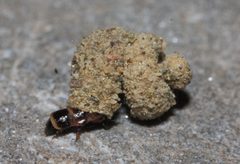
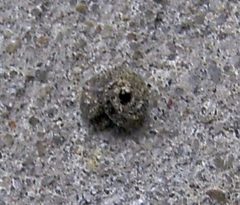
Distinguished by the spiral, snail-shell-shaped larval case constructed from silk and plant debris. The helical coiling pattern is tighter and more regular than most Psychidae. Females are and wingless, lacking characteristics. Cases are typically 10-15 mm in diameter when mature.
Images
Habitat
Found in gardens, parks, and urban environments where plants occur. Tolerates a range of conditions from lowland to alpine elevations in its native range.
Distribution
Native to Europe from Portugal through central Europe and the Alps to the Ural Mountains; also present in the Balkans and Turkey. Introduced to the United States in the 1940s, now established throughout the Mid-Atlantic region with additional records from Michigan, western states, and the West Coast.
Diet
Larvae feed on lichens, , and plant detritus.
Life Cycle
Females are paedogenetic, retaining larval and remaining within their cases throughout life. Males emerge as winged to mate. occurs without female from the case.
Behavior
Larvae drag their helical cases along surfaces while feeding. Cases are permanently attached to substrates prior to .
Ecological Role
that processes lichens and organic debris.
Human Relevance
Considered a minor pest in urban and horticultural settings in North America due to its introduced status and case accumulation on structures and plants.
Similar Taxa
- Luffia ferchaultellaAlso constructs spiral cases, but with looser coiling and different case materials; native to Europe, not established in North America.
- Apterona crenulellaCongeneric with similar case structure, distinguished by geographic range and minor case differences.