
Pyralis manihotalis
Guenée, 1854
Tropical Meal Moth
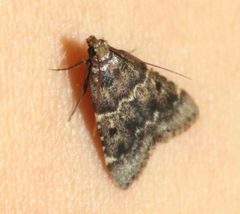
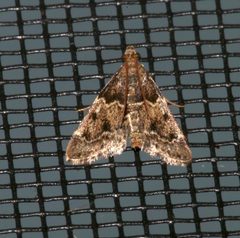
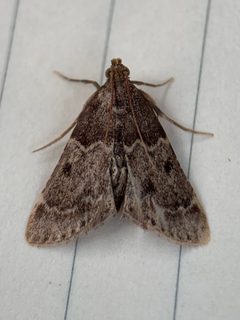
Pyralis manihotalis is a small pyralid with a pan-tropical distribution, described by Achille Guenée in 1854. It is frequently associated with stored products and decaying organic matter, earning it the Tropical Meal Moth. The has been documented in an unusually wide range of , including caves where self-sustaining feed on bat guano. are and attracted to ultraviolet light.
Pronunciation
How to pronounce Pyralis manihotalis: //pɪˈræ.lɪs məˌnɪ.hoʊˈtælɪs//
These audio files are automatically generated. While they are not always 100% accurate, they are a good starting point.
Identification
The can be distinguished from similar pyralid moths by its small size and association with stored products and decaying materials. The wingspan measurements vary considerably in literature, which may reflect geographic variation or measurement differences. Accurate identification likely requires examination of genitalia or molecular methods, as is common for small pyralid species.
Images
Habitat
Highly adaptable; found in warehouses, storage facilities, and caves. Self-sustaining have been documented in caves feeding on bat guano. Occurs in both natural and human-modified environments across the tropics.
Distribution
Pan-tropical and widespread: Africa (Democratic Republic of Congo, Côte d'Ivoire, Madagascar, Mauritius), Asia (India, Sri Lanka, China, Taiwan, Thailand, Malaysia, Singapore, Indonesia, Philippines), Australia, Oceania (Samoa, Hawaii), South America, and the West Indies. Occasionally recorded in Europe through accidental importation in bones and animal hides.
Diet
Larvae feed on dead and decaying materials including stored grain, meal, pulses, dried fruit, bones, animal hides, and chocolate. : feeding habits not well documented.
Life Cycle
Complete with , larva, pupa, and stages. Larval development occurs in or on food substrates. Specific timing of life stages not documented.
Behavior
are primarily but easily disturbed by day in warehouses. Attracted to ultraviolet light. Larvae feed on a wide range of decaying organic materials.
Ecological Role
Decomposer; larvae break down dead and decaying organic matter. In cave , contributes to nutrient cycling through consumption of bat guano.
Human Relevance
Pest of stored products including grain, meal, pulses, dried fruit, and chocolate. Occasionally introduced to non-native regions (Europe) through trade in animal products. Subject of scientific interest for its unusual cave-dwelling .
Similar Taxa
- Other Pyralis speciesSimilar and shared characteristics; require detailed examination for separation
- Stored product moths in family PyralidaeOverlap in use and food preferences; P. manihotalis distinguished by specific size range and geographic distribution pattern
More Details
Cave ecology
Weinstein and Edwards (1994) documented a self-sustaining in an Australian cave, representing an unusual troglophilic lifestyle for this .
Sources and further reading
- BugGuide
- Wikipedia
- GBIF taxonomy match
- iNaturalist taxon
- NCBI Taxonomy
- Catalogue of Life
- Photinus-pyralis-AW - Entomology Today
- Fireflies are busy flashing for mates! Lampyridae spp. — Bug of the Week
- Bug Eric: Firefly Tag
- Fireflies celebrate 20 years of Bug of the Week – Fireflies, Lightning Bugs, Lampyridae — Bug of the Week
- Bug Eric: Home Bioblitz, Ongoing
- Bug Eric: 2021