Sciota virgatella
(Clemens, 1860)
Black-spotted Leafroller Moth
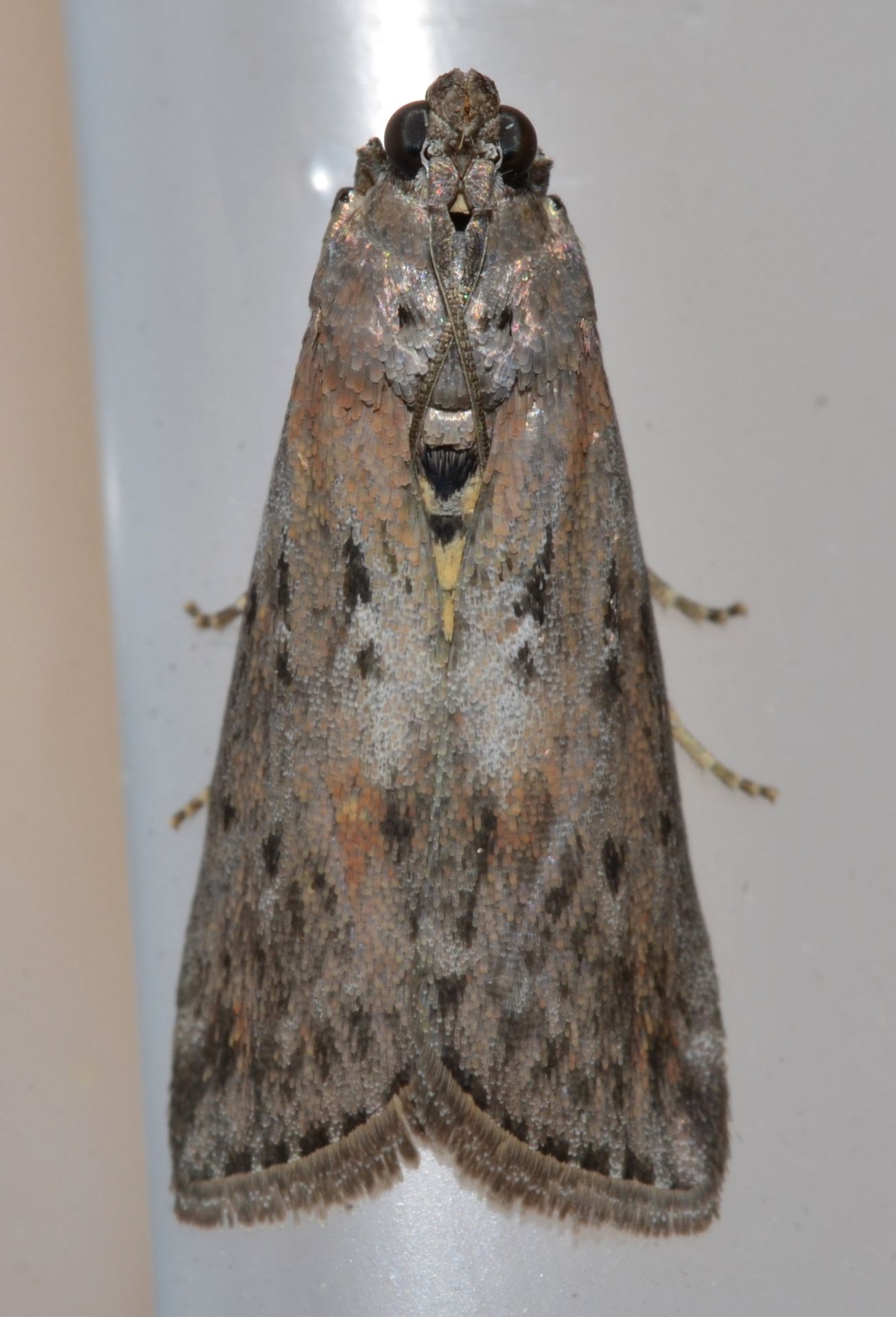
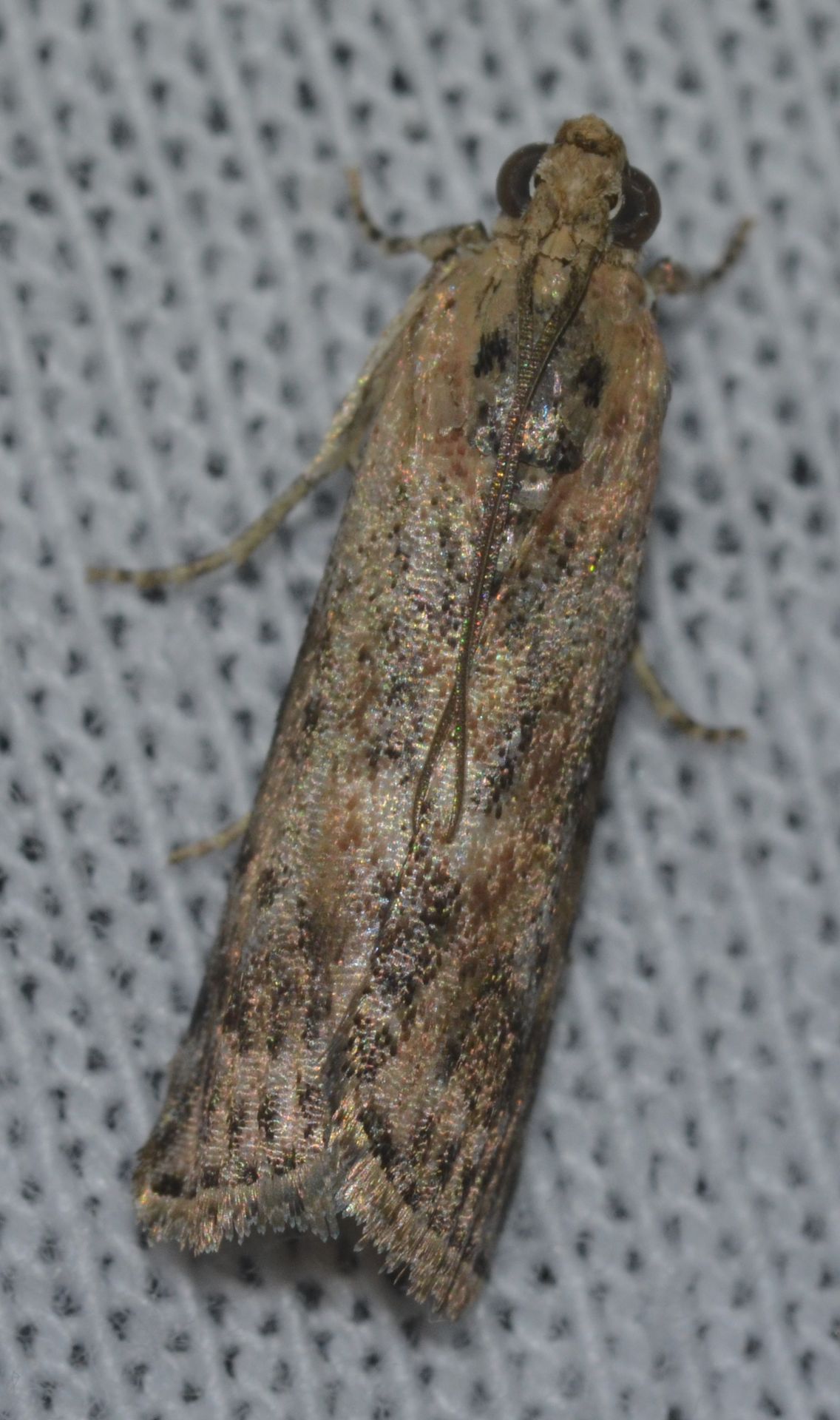
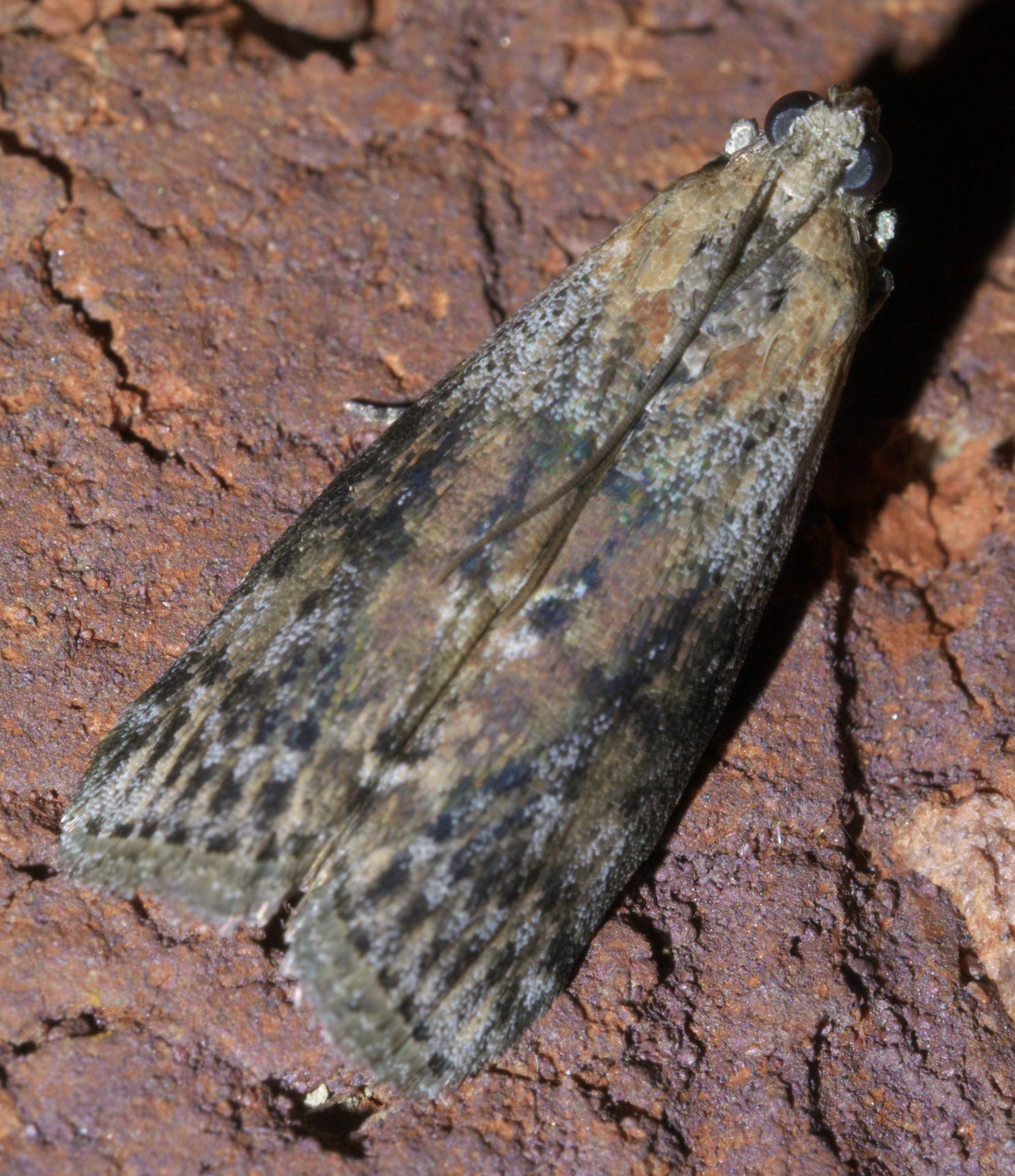
Sciota virgatella, known as the black-spotted leafroller , is a small snout moth in the Pyralidae. First described by James Brackenridge Clemens in 1860, it occurs widely across eastern and central North America. The is active throughout much of the year, with recorded from February through September. Its references the larval habit of rolling or folding leaves.
Pronunciation
How to pronounce Sciota virgatella: /ˈsi.o.ta vɪrˈɡɑtɛ.la/
These audio files are automatically generated. While they are not always 100% accurate, they are a good starting point.
Identification
The can be distinguished from other Sciota by geographic range and period. Within the , S. virgatella is one of several North American species; precise field identification to species level typically requires examination of genitalia or molecular analysis. The 'leafroller' distinguishes it from related 'webworm' species in other genera.
Images
Appearance
have a wingspan of 22–26 mm. As a member of the snout moth Pyralidae, the possesses the characteristic projecting labial palps that form a snout-like structure. Specific coloration and pattern details are not documented in available sources.
Habitat
Specific preferences are not documented. Based on larval inferred from the , the likely occupies wooded or shrubby environments where plants for leaf-rolling larvae are present.
Distribution
Recorded from 23 jurisdictions in North America: Arkansas, Florida, Georgia, Illinois, Indiana, Maine, Maryland, Massachusetts, Minnesota, New Jersey, New York, North Carolina, Ohio, Oklahoma, Ontario, Pennsylvania, Quebec, South Carolina, Tennessee, Texas, Vermont, Virginia, and West Virginia.
Seasonality
are active from February to September, indicating a prolonged period with possible multiple or adults emerging early in the year.
Host Associations
- leafroller - larval habit indicates larvae roll or fold leaves, but specific plant are not documented.
Similar Taxa
- Sciota uvinellaAnother North American Sciota ; also a leafroller, but associated with sweetgum (Liquidambar styraciflua) and with different geographic distribution.
- Other Pyralidae leafrollersMany pyralid moths share leaf-rolling larval habits; identification requires detailed examination.
More Details
Taxonomic history
Originally described as Pempelia virgatella by Clemens in 1860 before transfer to Sciota.
Observation frequency
The has 1,977 observations on iNaturalist as of source date, indicating it is moderately well-documented by citizen scientists.